What Is a Riving Knife vs Splitter? A Down-to-Earth Guide
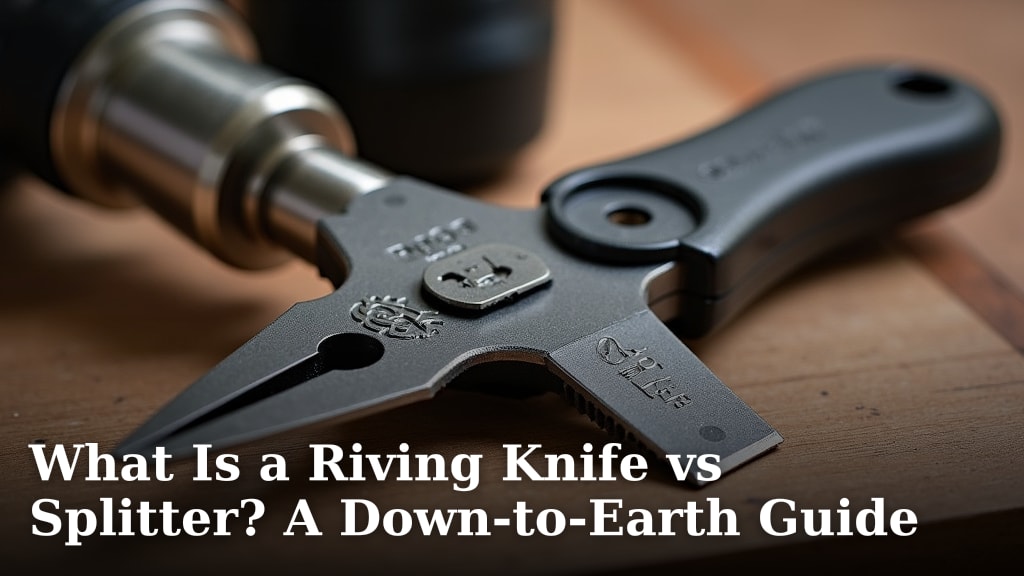
A riving knife is a blade-like metal piece that follows the saw blade’s path to prevent kickback. A splitter is a similar device, often a thin piece of metal or plastic, that also prevents wood from pinching the saw blade.
Both tools serve a similar safety purpose on your table saw. They help keep your workpieces from closing in on the blade. This greatly reduces the chance of dangerous kickback. Many people wonder if one is better than the other for certain jobs.
- A riving knife moves with the saw blade.
- It stays closer to the blade than a traditional splitter.
- Splitters are often fixed and don’t move with the blade.
- Both help prevent wood from pinching the blade.
- This protects you from dangerous kickback.
Let’s break down the differences between a riving knife and a splitter so you can choose the right one for your saw.
Understanding Riving Knives Versus Splitters
You’re probably wondering about the main difference between a riving knife and a splitter. They sound pretty similar, and in many ways, they are! Both are safety devices on your table saw designed to keep you safe from a nasty event called kickback. Think of them as your saw’s guardian angels.
But while they share a common goal, how they achieve it and their specific features can differ. We’ve looked into what makes them distinct so you can know which one is right for your workshop and your woodworking projects.
What Exactly Is a Riving Knife?
A riving knife is a metal blade that’s shaped much like the saw blade itself. Its primary job is to follow directly behind the saw blade as it cuts through your wood. This close proximity is key to its effectiveness.
The riving knife is mounted to the saw’s arbor, meaning it moves up and down and tilts right along with the saw blade. This makes it a very adaptable safety feature. It’s designed to prevent the wood kerf from closing up on the blade, which is a major cause of kickback.
How a Riving Knife Protects You
When you cut wood, the wood on either side of the saw blade wants to spring back together. This is especially true for wood that has internal stresses. If this happens while the blade is still in the wood, the wood can pinch the blade.
A riving knife’s design ensures it stays aligned with the saw blade. As the blade cuts, the knife immediately follows, holding the kerf open. This prevents the wood from grabbing the blade and hurling itself back at you. It’s a direct defense against kickback.
Riving Knife Features and Benefits
- Adjustable Height: Most riving knives can be adjusted up or down to match the height of your saw blade. This ensures it’s always in the optimal position.
- Tilting Capability: When you tilt your saw blade for bevel cuts, the riving knife tilts with it. This maintains proper alignment throughout the cut.
- Blade Proximity: Its close alignment with the saw blade means it can react instantly to prevent pinching. This is a significant safety advantage.
- Integrated Design: Often, the riving knife is part of the saw’s overall guard system, making it a robust and integrated safety feature.
What Is a Saw Splitter?
A splitter is another type of safety device. Like a riving knife, its main purpose is to keep the cut kerf open and prevent the wood from pinching the saw blade. This, in turn, helps to prevent dangerous kickback.
However, traditional splitters are often a fixed piece of metal or plastic. They are typically positioned behind the blade but do not move with it. This difference in movement is a primary distinction between the two.
Types of Splitters
You might encounter a few different kinds of splitters:
Fixed Splitters
These are the most common type. They are mounted to the saw’s throat plate or the table insert. They sit behind the blade but remain in a fixed position. They don’t adjust for blade height or tilt.
Hinged Splitters
Some splitters have a hinged design. This allows them to fold out of the way more easily when you’re not using them or when doing certain types of cuts. They still generally remain in a fixed location relative to the table, not the blade.
How Splitters Work
A splitter acts as a barrier behind the blade. As you push the wood through the saw, the splitter helps to keep the two sides of the cut from collapsing inward. It provides a physical separation in the kerf.
While effective, their fixed nature means they might not always offer the same level of continuous protection as a riving knife, especially during complex cuts or when the blade height changes significantly. They work best when the blade height is set appropriately for the thickness of the material being cut.
Riving Knife vs. Splitter: Key Differences
Let’s break down the core distinctions you need to know. It really comes down to how they move (or don’t move) and their alignment with the saw blade.
| Feature | Riving Knife | Splitter (Traditional) |
|---|---|---|
| Movement | Moves with the saw blade (up, down, tilt) | Fixed position, does not move with the blade |
| Proximity to Blade | Stays very close to the back of the blade | Positioned behind the blade, but can be further away |
| Adaptability | Excellent for various cut depths and bevels | Less adaptable; best with consistent blade height |
| Safety Mechanism | Directly holds kerf open, follows blade path | Acts as a barrier to prevent kerf closure |
| Installation | Often integrated into the saw’s arbor assembly | Typically attached to the throat plate or insert |
Alignment and Protection Levels
The riving knife’s ability to move with the blade is its biggest advantage. This means it’s always in the right place relative to the saw blade. For many woodworking tasks, especially those involving varying depths of cut or frequent bevel adjustments, this provides superior protection.
A splitter, while functional, relies on you to set the blade height correctly. If the blade is set too high or too low for the material, the splitter might not be able to effectively keep the kerf open. This can reduce its protective capabilities. Many experts suggest that a riving knife offers a higher safety standard.
When Might You Use Each?
If your table saw comes with a riving knife, it’s generally recommended to use it for almost all through-cuts. It’s designed to be your primary safety device. You would only remove it if a specific operation absolutely requires it (and even then, extreme caution is advised).
Splitters are more common on older saws or as add-on safety devices. They are still useful, especially for basic cuts where blade height is consistent. However, if you have the option for a riving knife, it’s usually the preferred choice for modern woodworking safety.
Choosing the Right Safety Device for Your Saw
When you’re looking at table saws, pay attention to the safety features. Modern saws increasingly come equipped with riving knives as standard equipment. This is because they are considered a more advanced and effective safety mechanism.
If your saw has a splitter, understand its limitations. It’s better than nothing, but a riving knife offers a more robust solution. Some manufacturers offer aftermarket riving knife kits for saws that only came with splitters. These can be a worthwhile investment for your safety.
Considerations for Your Workshop
Think about the types of cuts you do most often. Do you make a lot of through-cuts? Do you frequently change blade heights or make bevel cuts? If so, a riving knife will be more convenient and safer.
If you primarily do simple, repetitive cuts at a set blade height, a splitter can still provide a good level of protection. However, we found that the simplicity and effectiveness of a riving knife often make it the go-to safety accessory for serious woodworkers.
Making the Most of Your Safety Gear
Regardless of whether you have a riving knife or a splitter, using it correctly is paramount. Here’s a quick checklist to ensure you’re getting the most out of your safety device:
- Always install it: Don’t skip this step, even for quick cuts.
- Ensure proper alignment: Make sure it’s tracking correctly with your blade.
- Check blade height: For splitters, set your blade height appropriately.
- Keep it clean: Sawdust can impede function.
- Inspect for damage: Replace if bent or damaged.
- Never force wood: Let the saw do the work.
Conclusion
You’ve learned that both riving knives and splitters are vital safety features for your table saw, designed to prevent dangerous kickback. While traditional splitters offer basic protection, a riving knife’s ability to move and tilt with the saw blade provides superior, more adaptable safety. We found that if your saw has a riving knife, using it consistently for through-cuts is your best defense. If you have a splitter, ensure your blade height is always set correctly for maximum effectiveness. Consider upgrading to a riving knife if your saw didn’t come with one – your safety is worth the investment.
Frequently Asked Questions
Is a riving knife always better than a splitter?
Generally, yes. A riving knife’s ability to move with the saw blade means it maintains optimal alignment for preventing kickback in more situations. Splitters are good, but their fixed position can make them less effective if the blade height isn’t perfectly matched to the material.
Do I need to remove the riving knife for certain cuts?
For most standard through-cuts on a table saw, you should always keep the riving knife installed. You might need to remove it for very specific operations like making dadoes or rabbets, but always exercise extreme caution and understand the increased kickback risk.
Can I add a riving knife to an older saw with only a splitter?
Yes, aftermarket riving knife kits are available for many older table saws that came with only a splitter. We’ve found these can be a worthwhile safety upgrade. Check with your saw’s manufacturer or reputable woodworking supply stores for compatible options.
How does a riving knife prevent kickback?
A riving knife works by holding the cut kerf open immediately behind the saw blade. This prevents the wood from pinching the blade, which is a primary cause of dangerous kickback. Its close proximity and synchronized movement are key to its effectiveness.
What’s the difference between a hinged splitter and a fixed splitter?
A fixed splitter is bolted in place behind the blade. A hinged splitter can often be folded out of the way for easier access or certain types of cuts, but it still typically remains in a fixed location relative to the table, not the moving blade itself.