What Is a Jobsite Table Saw? A Closer Look
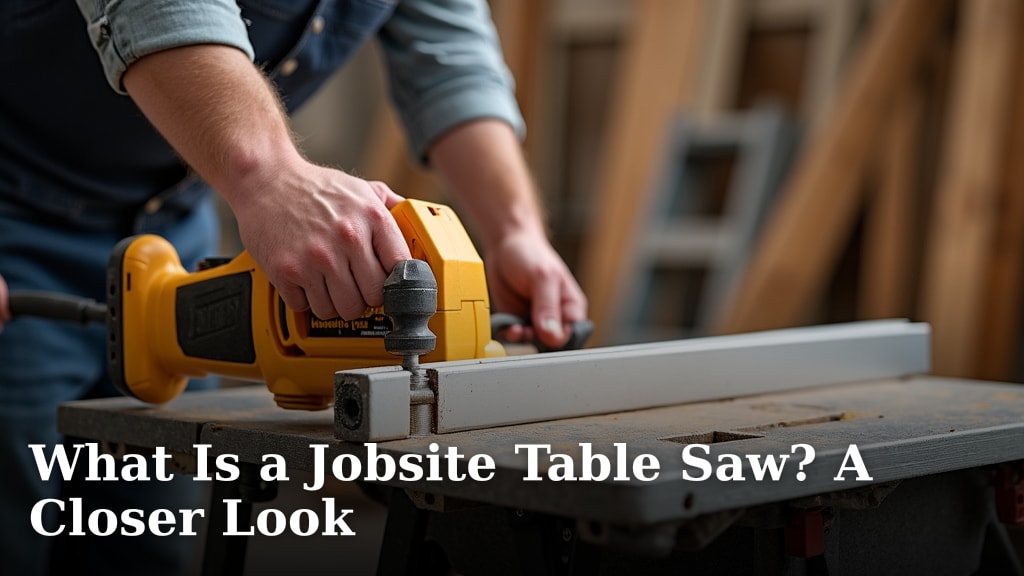
A jobsite table saw is a compact, portable power saw designed for cutting wood on construction sites or in your garage. It is a smaller, more mobile version of a standard stationary table saw. You’ll find it has a powerful motor and a sturdy table, all built to be moved easily.
We found that these saws are all about practicality and power in a small package. They typically run on 110-volt electricity, so you can plug it in almost anywhere. They are the go-to tool for framing, trimming, and general carpentry work when you can’t bring the big shop to the job.
- It is a portable power saw for woodcutting on job sites.
- Key features are its compact size and easy transport.
- Runs on standard power, making it versatile for most locations.
- Perfect for framing, decking, and cutting sheet goods on-site.
- An essential tool for contractors and serious DIYers needing mobility.
Now, let’s look closer at what makes this saw different from other types. We’ll explore the key features that define a jobsite model.
Understanding the Jobsite Table Saw: Key Features and Differences
A jobsite table saw is a portable power saw with a compact design, powerful motor, and sturdy table, built for easy transport and use on construction sites or in home garages.
Design and Build: What Makes It Portable?
The core of a jobsite saw is its ability to move with you. It is not a heavy, stationary beast meant to stay in one spot. Manufacturers focus on making it light enough for one person to carry and sturdy enough to handle real work.
The Compact Frame and Lightweight Materials
We found that most jobsite saws weigh between 50 and 100 pounds. This is achieved by using materials like heavy-duty plastic and lighter gauge steel for non-structural parts. The tabletop is often smaller, typically around 24 to 28 inches wide, which keeps the overall size down. Think of it like the difference between a full-size truck and a robust SUV; both are capable, but one is designed for easier navigation.
Power and Performance Under the Hood
Don’t let the size fool you. These saws pack a punch. They are engineered to make tough cuts quickly, which is what you need when the clock is ticking on a job.
Motor Specifications and Voltage
Most jobsite table saws run on a 15-amp motor that plugs into a standard 110-volt household outlet. This is a key feature. You don’t need a special power source. We found that this amperage is sufficient for cutting through common framing lumber, plywood, and even hardwoods. Some high-end models offer more power, but the 15-amp standard is the sweet spot for portability and performance (Consumer Reports).
Cutting Capacity and Blade Size
Typically, these saws use a 10-inch blade. This allows for a good cut depth, usually around 3-1/8 inches at 90 degrees. That’s enough to cut through a 4×4 post in two passes. The rip capacity, or the distance from the blade to the fence, usually ranges from 24 to 52 inches. That wide rip capacity is essential for cutting full sheets of plywood on-site without a hassle.
Safety Features You Can’t Ignore
Any power tool demands respect, and the table saw is no exception. Jobsite models come with critical safety mechanisms designed to prevent common accidents.
Standard Safety Mechanisms
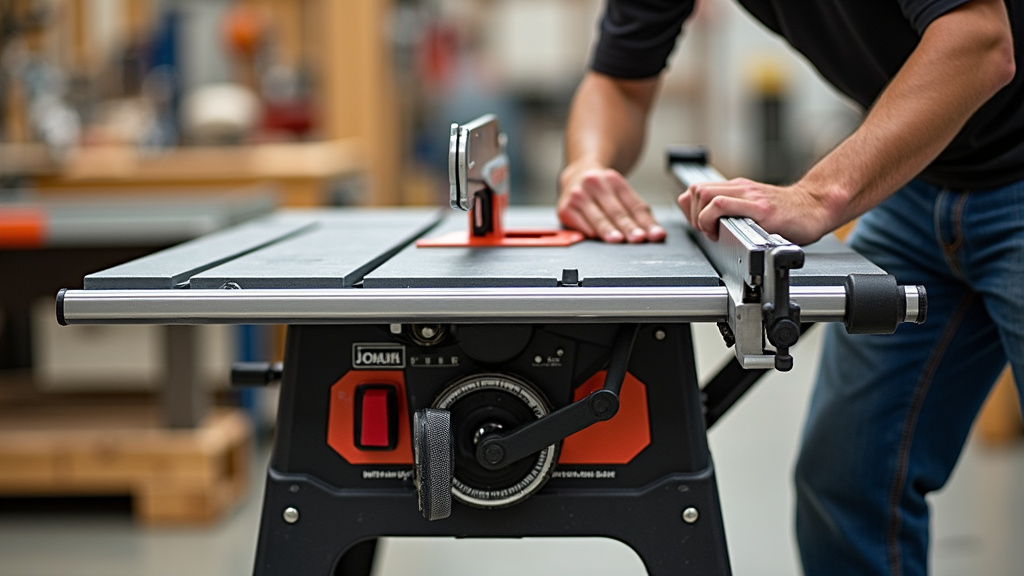
You will always find a blade guard. This clear plastic cover sits over the blade when it’s not cutting, stopping accidental contact. There’s also a riving knife. This metal piece sits behind the blade and prevents the wood from pinching and kicking back at you. We found that modern riving knives are excellent at reducing this dangerous risk (North Carolina State University).
Blade Guards and Riving Knives
Look for a model with a tool-free adjustment for these parts. When you need to change blades or make a bevel cut, you want to remove and replace the guard quickly. A good design here saves you time and, more importantly, encourages you to always use the safety features.
Jobsite Table Saw vs. Other Table Saws
How does this portable saw stack up against its bigger cousins? Let’s put them side-by-side. The choice really comes down to your primary need: mobility or maximum stability.
| Feature | Jobsite Table Saw | Contractor Table Saw | Cabinet Table Saw |
|---|---|---|---|
| Primary Use | Construction sites, mobile work | Home workshops, semi-permanent | Professional woodshops |
| Weight | 50-100 lbs | 150-250 lbs | 300+ lbs |
| Portability | Very High (often has wheels) | Low (needs to be moved by two people) | None (stationary) |
| Power Source | 110V (standard outlet) | 110V or 220V | 220V (dedicated circuit) |
| Price Range | Moderate | Moderate to High | High |
Common Applications: Where This Saw Shines
You’ll see a jobsite saw on almost every construction site for a good reason. It’s a versatile workhorse for specific, demanding tasks.
Framing and Trim Work
ConclusionYou now know a jobsite table saw is a portable powerhouse. It’s built for **mobility and strength** on the go. We’ve covered its compact design, standard 110-volt power, essential safety features, and how it compares to larger saws. This tool is the top choice for contractors and serious DIYers who need to cut lumber, plywood, and trim **directly at the work site**. Your next step is to assess your project needs. If you regularly work in different locations, prioritize features like weight, rip capacity, and tool-free adjustments when shopping.
Frequently Asked Questions
Is a jobsite table saw accurate enough for fine woodworking?
For most **on-site tasks** like framing and decking, it is very accurate. While a stationary saw in a controlled shop may offer higher precision, a good jobsite model with a solid fence will handle finish carpentry well. Always check reviews for comments on fence accuracy.
Can I use a jobsite table saw at home in my garage?
Yes, absolutely. Its **compact size and standard plug** make it perfect for home workshops. It takes up less space than a contractor saw and is easier to move around. It’s a great all-around choice for DIYers with limited space.
How often should I replace the blade on my jobsite saw?
It depends on use, but a good quality blade should last through many projects. **Check for dullness or burn marks** on wood as signs. Most users find a blade lasts a year with regular use. Keeping it clean extends its life.
What is the most important safety feature to look for?
We found the **riving knife is absolutely critical**. It prevents dangerous kickback by stopping the wood from pinching the blade. Never remove it for a cut. A tool-free guard system is also highly recommended for convenience.
Are jobsite table saws loud?
They produce a typical power tool noise level, **around 100 decibels**. Always use hearing protection when operating any table saw. Some newer models feature slightly quieter motors, but ear safety is essential regardless.