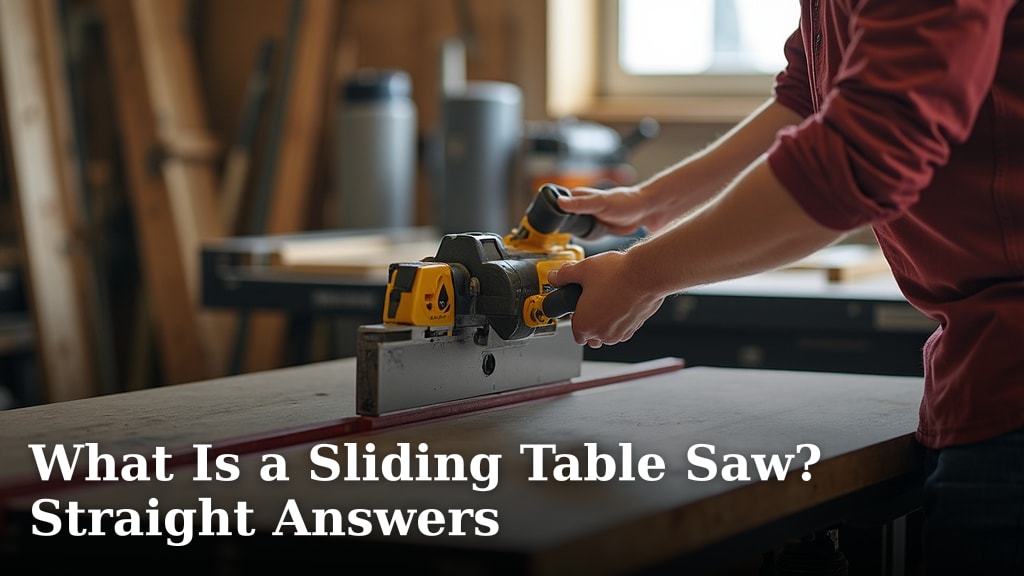
What Is a Sliding Table Saw? Straight Answers
Understanding the Sliding Table Saw
A sliding table saw is a large, stationary woodworking machine that cuts wood panels and boards with extreme precision. Its key feature is a sliding table that moves alongside the saw blade, guiding the wood for perfectly straight cuts every time. You might find these in professional cabinet shops, but they are also valuable for serious hobbyists and small businesses.
The Core Parts and How They Work
Think of a sliding table saw as a team of specialized components working together. The main parts you need to know are the saw unit, the sliding table, and the rip fence. Each plays a distinct role in making your cuts accurate.
The Saw Unit and Blade
This is the heart of the machine. It holds a circular saw blade that spins at high speed. The blade can typically tilt to different angles. For most panel work, you keep it at 90 degrees for straight, vertical cuts. The motor needs enough power to cut through thick hardwood without struggling.
The Sliding Table
This is the defining component. The sliding table is a large, flat table that runs on precision rails or bearings. You secure your workpiece to this table. Then, you push the entire table forward, moving the wood past the spinning blade. This action guarantees a straight cut because the table guides the wood on a fixed path. Many experts say this system reduces tear-out and tear-in on the wood’s surface significantly.
The Rip Fence and Crosscut Fence
The rip fence is a guide that runs parallel to the blade. It helps you cut boards lengthwise to a specific width. The crosscut fence is attached to the sliding table itself. It lets you set angles for cutting pieces to a specific length. Having both fences gives you versatile cutting options.
Sliding Table Saw vs. Table Saw: What’s the Real Difference?
This is a common question. On a standard table saw, the blade is stationary, and you push the wood across the fixed table top against the rip fence. With a sliding table saw, the wood is secured to the moving table, and you push the table to move the wood. The result is greater control and accuracy, especially with large, heavy sheets.
Accuracy and Safety with Large Panels
Trying to cut a 4×8 sheet of plywood on a regular table saw can be dangerous and inaccurate. The sheet is heavy, awkward, and hard to control against the fence. A sliding table saw solves this. You clamp the sheet to the sliding table and guide it smoothly. Research from the Woodworking Machinery Industry Association suggests this method significantly reduces the risk of kickback for large workpieces.
Common Types You’ll Encounter
Not all sliding table saws are the same. They vary in size, power, and price. Understanding the types helps you match the machine to your needs.
| Type | Key Characteristics | Typical User |
|---|---|---|
| Compact or Workshop Models | Smaller footprint, often with a sliding table on one side. More affordable. | Serious hobbyists, small custom shops. |
| Panel Saws | Full-sized, dedicated machines. Larger sliding tables, more power, and higher precision. | Professional cabinetmakers, production shops. |
| Combo Machines | Combine a sliding table saw with a shaper or router table. Saves space but may have compromises. | Shops with limited space needing multiple functions. |
Key Advantages for Your Workshop
Why would you choose a sliding table saw over a traditional one? The benefits become clear when you work with large sheet goods like plywood, MDF, or melamine.
- Superior Accuracy: The sliding mechanism ensures cuts are perfectly straight and square, which is critical for building cabinets and furniture.
- Enhanced Safety: Your hands stay farther from the blade. The workpiece is controlled by the table, not just your hands pushing it.
- Effortless Handling of Large Sheets: You can manage a full 4×8 sheet by yourself, reducing strain and increasing efficiency.
- Cleaner Cuts: Reduced vibration and firm support lead to smoother edges, often requiring less sanding afterward.
Potential Drawbacks to Consider
These machines aren’t perfect for every situation. Being aware of the downsides helps you make an informed choice.
- Cost: A quality sliding table saw is a significant investment. Prices are generally higher than for standard cabinet saws.
- Size and Weight: They take up a lot of shop space and are very heavy. You need a solid, level floor for installation.
- Less Ideal for Small Rip Cuts: For ripping long, narrow boards, a traditional table saw with a good rip fence can sometimes be quicker and more convenient.
Essential Features to Look For When Shopping
If you decide a sliding table saw is right for you, focus on these critical features. We found that build quality here directly impacts long-term performance and safety.
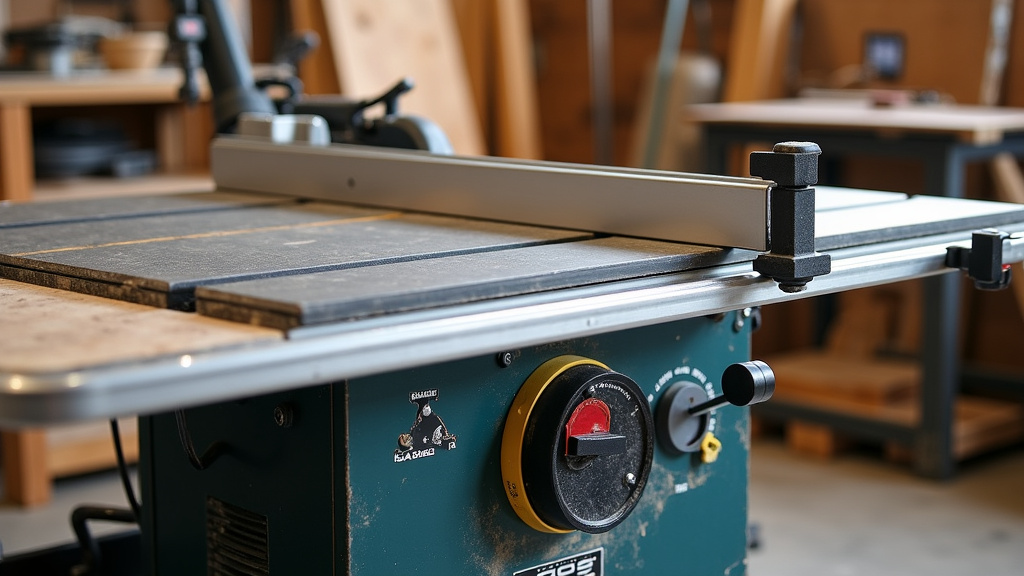
- Sliding Table Action: This must be smooth, rigid, and play-free. Test it in person if possible. A wobbly table ruins accuracy.
- Table Size: Consider the size of material you’ll cut most often. The sliding table and extension wings should support your largest panels.
- Motor Power: For hardwoods and thick stock, a motor of 3 to 5 horsepower is a good range. It should not bog down in cuts.
- Fence Systems: Ensure the crosscut fence and rip fence are sturdy, easy to adjust, and lock down securely.
- Dust Collection: These machines create a lot of dust. Good port design and dust collection are vital for a clean and safe shop.
A Simple Checklist for Your Purchase Decision
Use this list as a quick reference when evaluating different models.
- The sliding table moves smoothly with no noticeable play or wobble.
- The motor has sufficient horsepower for the hardest wood you will cut.
- The fences are robust, easy to calibrate, and lock firmly in place.
- The overall table size accommodates your typical workpiece dimensions.
- Dust collection ports are well-positioned and sized for your system.
Maintenance for Long-Term Performance
Like any precision tool, a sliding table saw requires care. Regular maintenance keeps it running safely and accurately for years. A few minutes of care after use goes a long way.
Daily and Weekly Care
Keep the sliding table’s ways clean from sawdust and debris. Wipe them down and apply a dry lubricant as recommended by the manufacturer. Check that the blade is clean and free of pitch buildup. Inspect the blade and insert plate for any damage before each use.
Periodic Checks
Every few months, check the alignment of the blade to the sliding table. Also, verify the fence scales are accurate. Most machines have adjustment points for these calibrations. The manual will guide you through the process.
Is a Sliding Table Saw Right for You?
Ask yourself what you build most often. If your primary work involves breaking down large sheet goods for cabinets, built-ins, or furniture, a sliding table saw is an outstanding tool. It will save you time, improve your results, and keep you safer. If you mostly cut small boards and do detailed joinery, a high-quality cabinet saw might be a better fit. Many workshops even use both types side-by-side.
Investing in a sliding table saw is a commitment to precision and efficiency in your craft. Taking the time to understand its features ensures you choose a machine that will serve you well for a long time.
Conclusion
A sliding table saw is a powerhouse machine built for precision and safety when working with large sheet goods. It excels at breaking down plywood and MDF for cabinet and furniture projects, offering straight cuts that are hard to match with a standard table saw. The key is matching the machine’s size and features to your actual work and shop space.
Your next step is simple: measure your workshop and list your most frequent cuts. If managing full 4×8 sheets is a regular struggle, it’s time to seriously consider a sliding table saw. For smaller projects, a traditional saw may serve you better. We recommend visiting a supplier to feel the sliding action of different models before you decide.
Frequently Asked Questions
How much does a good sliding table saw cost?
You can expect to invest anywhere from $3,000 to $10,000 or more. Entry-level workshop models start around the lower end, while professional-grade panel saws with larger tables and more power are at the higher end. It is a significant purchase, so budgeting appropriately is key.
Do I need a huge workshop for one?
Yes, space is a major consideration. These are large, stationary machines. You need a dedicated footprint for the saw itself, plus room around it to comfortably maneuver full 4×8 sheets. A solid, level concrete floor is also necessary for stability and accuracy.
Is the learning curve steep for a beginner?
While it is safer for large panels than a table saw, it is still a powerful industrial machine. We found most woodworkers can learn the basics of making straight cuts relatively quickly. However, mastering all the fence adjustments and optimizing for complex cuts takes practice and patience.
Can I use my regular table saw blades on it?
Generally, yes, if the arbor size matches. However, for the best results and safety, many users recommend dedicated, high-quality blades designed for panel saws. These often have specific tooth geometries to reduce tear-out on both sides of plywood and melamine.
Will it completely replace my traditional table saw?
For many shops, it complements rather than replaces. The sliding table saw is unmatched for crosscutting and breaking down panels. A traditional cabinet saw with a good rip fence is often faster and more convenient for ripping long, narrow boards. Many professional shops use both machines side-by-side.