What Is Blade Kerf? The Plain English Answer

Blade kerf is simply the width of the cut a saw blade makes. Think of it as the tiny slice of material your saw removes as it passes through wood. Knowing your blade kerf helps you make accurate cuts every time. It affects how much material you waste and how precisely your pieces fit together.
This measurement is more important than you might first realize for woodworking projects. Understanding blade kerf can prevent common cutting mistakes. It’s a small detail that makes a big difference in your final project. We’ve researched how this simple measurement impacts your work.
- Blade kerf is the width of the saw cut.
- It’s the material removed by the blade.
- Knowing kerf helps with accurate measurements.
- It impacts material waste and piece fit.
- Understanding kerf is key for precise woodworking.
Let’s walk through exactly what blade kerf is and why it matters for your DIY projects.
Understanding Saw Blade Kerf Width
Saw blade kerf is simply the width of the cut a saw blade makes. Think of it as the tiny slice of material your saw removes as it passes through wood. Knowing your blade kerf helps you make accurate cuts every time. It affects how much material you waste and how precisely your pieces fit together.
This measurement is more important than you might first realize for woodworking projects. Understanding blade kerf can prevent common cutting mistakes. It’s a small detail that makes a big difference in your final project. We’ve researched how this simple measurement impacts your work.
What Exactly Is Blade Kerf?
Blade kerf refers to the thickness of the material that a saw blade removes from your workpiece during a cut. Every saw blade has a kerf, and it’s determined by the blade’s design, especially the width of its teeth. You can usually find the kerf measurement printed on the blade itself or in its specifications.
When you make a cut, the blade doesn’t just disappear through the wood. It has to displace material. The kerf is the space left behind by those displaced wood fibers. It’s essentially the width of the sawdust you’ll sweep up, though it’s a bit more precise than that!
For most general-purpose circular saw blades and table saw blades, you’ll often see kerf widths around 1/8 inch (3.2 mm). Thicker blades, sometimes called “full kerf” blades, can be 3/16 inch (4.8 mm) or even 1/4 inch (6.4 mm) wide. There are also “thin kerf” blades, which are designed to remove less material, typically around 3/32 inch (2.4 mm).
Why Kerf Matters For Your Projects
You might be wondering why this tiny measurement is worth your attention. It really comes down to precision and efficiency in your woodworking. Getting the kerf right, or at least understanding it, can save you time, material, and frustration.
Accuracy in Measurements and Cuts
When you measure and mark a cut line, you’re usually marking one edge of the line with your pencil. The saw blade’s kerf will remove material from that line. If you’re not careful, you might cut on the wrong side of your mark, making your piece too short or too long.
Let’s say you need a piece of wood to be exactly 10 inches long. You mark your 10-inch line. If your blade has a 1/8-inch kerf, and you cut *on* the line, you’ll end up with a piece that’s slightly less than 10 inches, because the blade removed that 1/8-inch strip of wood.
To get a precise 10-inch piece, you need to account for the kerf. Depending on which side of the line you want the blade to cut, you might need to adjust your mark. This is especially important when you’re building furniture or anything where parts need to fit together perfectly. Many woodworking guides suggest marking your cut line and then cutting *outside* that line if you want the dimension to remain accurate (Woodworking Fundamentals Guide).
Material Waste and Efficiency
A wider kerf removes more material. While this might not seem like a big deal on a single cut, it can add up over a project. If you’re cutting many pieces, especially from expensive hardwood, that wasted material can become noticeable.
Thin kerf blades are designed to be more material-efficient. They remove less wood with each pass. This means you can get more cuts from a single board. For DIYers working with budget-friendly materials or for professionals cutting large volumes, this can be a significant advantage.
However, wider kerf blades might offer other benefits, like a smoother cut in some applications. We found that the choice between full kerf and thin kerf often depends on the specific saw you’re using and the type of cuts you’re making.
Saw Performance and Kickback Risk
The width of the kerf also impacts how your saw performs. Thicker blades (full kerf) are generally more rigid. This rigidity can lead to a straighter, cleaner cut, especially on longer cuts or through dense materials. They are also less likely to deflect or wander off course.
On the flip side, a wider kerf requires more power from your saw to push through the material. If you have a less powerful motor, a full kerf blade might bog down the saw, leading to slower cuts or even stalling. This is where thin kerf blades shine, as they require less energy.
Regarding safety, some sources suggest that thin kerf blades might have a slightly higher risk of kickback if not used properly. This is because they have less surface area in contact with the wood, and a poorly set tooth could potentially bind more easily. However, proper technique and using a sharp, well-maintained blade are the most critical factors for preventing kickback, regardless of kerf width (Occupational Safety and Health Administration guidelines).
Types of Saw Blades and Their Kerf
Not all saw blades are created equal, and their kerf width is a key differentiator. Understanding these differences can help you pick the right blade for your task.
Full Kerf Blades
Full kerf blades are the traditional, thicker blades. They typically measure 1/8 inch (3.2 mm) or more in width. As we mentioned, their main advantage is rigidity and stability. This makes them excellent for making straight, clean cuts, especially in hardwoods or when making long rips.
Their drawback is that they require more power from your saw and create more waste. They are often found on professional-grade table saws where the motor has plenty of power to handle them.
Thin Kerf Blades
Thin kerf blades are designed to be narrower, usually around 3/32 inch (2.4 mm). The primary benefit here is that they require less power to cut. This makes them ideal for use with smaller jobsite saws or lower-powered tools. They also produce less waste material.
While they are more power-efficient and waste-reducing, they can be slightly less rigid than full kerf blades. This means they might be more prone to bending or wandering on very long cuts if you’re not careful.
Specialty Blades
Beyond the standard full and thin kerf options, you’ll find blades designed for specific tasks. For example, dado blades or stack dado sets are used to cut wide grooves. These have a different kerf structure, often composed of multiple blades and chippers to create a precise width of cut, which can be adjusted.
The kerf of a dado set is usually adjustable, allowing you to cut grooves of various widths, from 1/8 inch up to a full inch or more. This versatility is their main strength for tasks like cutting dados for shelves or joinery.
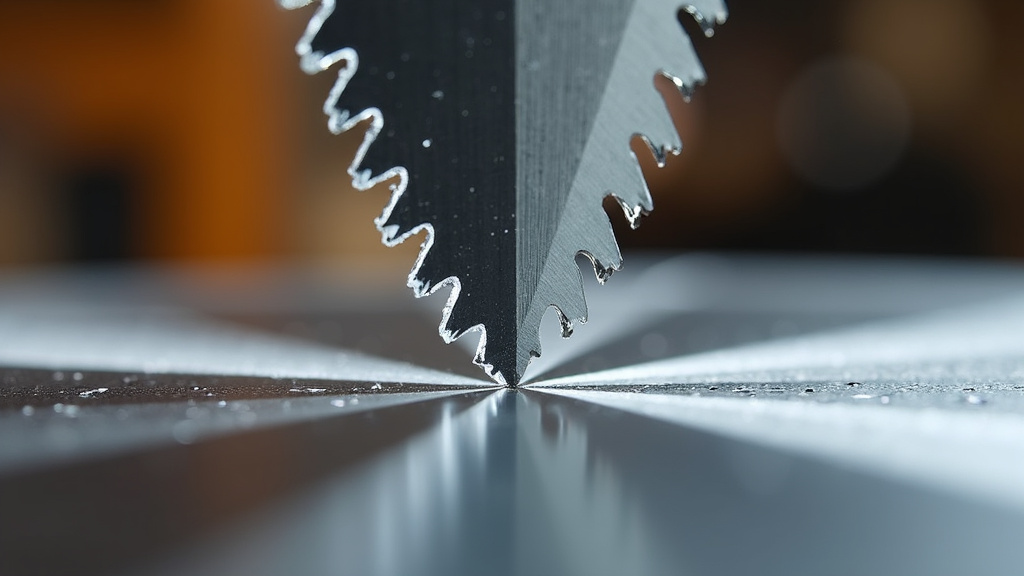
How to Measure Blade Kerf
You don’t always need to rely on the markings on the blade. You can measure the kerf yourself if you need to be absolutely sure. Here’s a simple way to do it:
- Find a straight edge: A ruler or a metal straight edge works well.
- Place the blade on its edge: Stand the saw blade up on its side.
- Use the straight edge to measure: Align the straight edge along one side of the blade’s cutting teeth. Then, measure the distance across to the other side of the teeth.
Alternatively, you can make a test cut in a scrap piece of wood and then measure the width of the resulting groove with a good set of calipers. This will give you the exact kerf width as it performs in actual use.
Choosing the Right Blade for Your Needs
Deciding whether to use a full kerf or thin kerf blade depends on several factors. Think about your saw, your materials, and the precision required for your project.
- Your Saw’s Power: If you have a powerful table saw, you can likely handle a full kerf blade with ease. If you have a smaller, portable saw, a thin kerf blade will likely perform better and put less strain on the motor.
- Type of Wood: For very hard woods, a thinner kerf might require less effort. For softer woods, either type will generally work well.
- Length of Cuts: For long ripping cuts, the added stability of a full kerf blade might be beneficial.
- Material Waste: If you’re working with expensive lumber or need to maximize your yield, thin kerf blades are the way to go.
- Desired Cut Quality: In some cases, a full kerf blade may produce a slightly smoother cut due to its rigidity, though modern thin kerf blade technology has greatly improved.
Quick Checklist for Blade Kerf Awareness
Keep these points in mind for your next project:
- Know your blade’s kerf width.
- Account for kerf when measuring cuts.
- Consider thin kerf for less power-hungry saws.
- Full kerf offers more rigidity for long cuts.
- Thin kerf saves material and reduces waste.
- Always use sharp, well-maintained blades for safety.
Conclusion
Understanding blade kerf is a small detail that truly pays off in your woodworking. You’ve learned that kerf is simply the width of the cut, impacting accuracy, material waste, and even your saw’s performance. Knowing whether to use a full kerf or thin kerf blade helps you work more efficiently and precisely. Next time you grab a saw, take a moment to consider your blade’s kerf. You’ll find your projects come together more smoothly and with less frustration.
Frequently Asked Questions
What happens if I ignore blade kerf when measuring?
If you don’t account for blade kerf, your cuts won’t be as accurate as you intend. Pieces might end up slightly too short or too long. This can cause problems when assembling components, especially if they need to fit together tightly.
Can I use a thin kerf blade on any saw?
Thin kerf blades are generally best for saws with less powerful motors, as they require less effort to cut. While you *can* use them on more powerful saws, you might find that a full kerf blade offers more stability for certain types of cuts on those machines.
Which type of blade is safer?
Blade safety primarily comes down to proper technique and maintenance. While some suggest thin kerf blades might have a slightly higher kickback risk, using a sharp blade and maintaining good cutting form are the most critical safety factors for any kerf type.
Do I need different kerf blades for different types of wood?
For very hard woods, a thin kerf blade can require less power and make the cut easier. For softer woods, either a full or thin kerf blade will typically perform well. Your saw’s power and the length of your cut are often bigger factors.
How do I know if my blade is full kerf or thin kerf?
You can often find the kerf width printed directly on the blade itself, usually near the arbor hole. If it’s not marked, you can measure it yourself with a ruler or calipers, or by making a test cut in scrap wood and measuring the groove’s width.