What Is a Portable Table Saw? The Short Answer
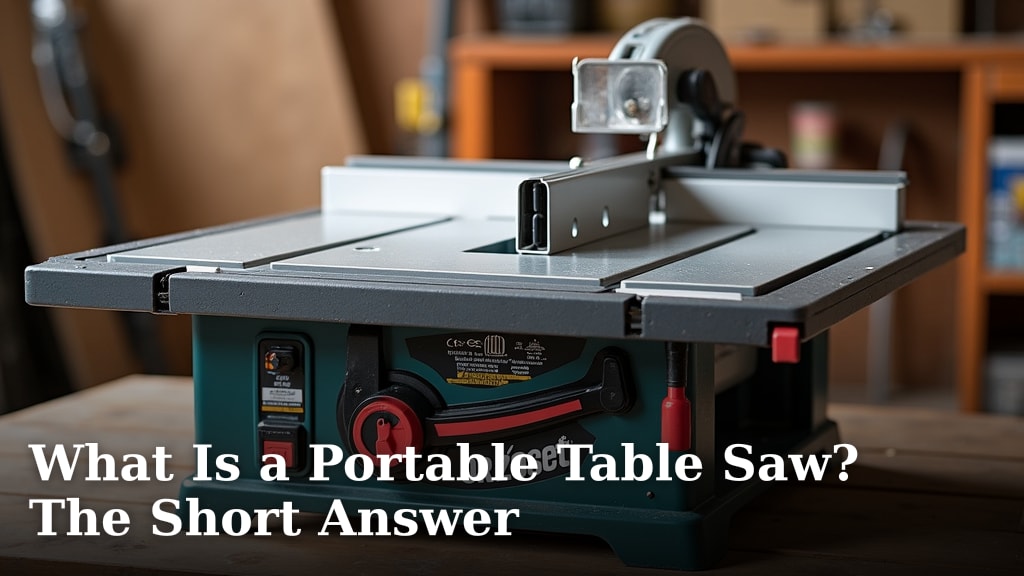
A portable table saw is a compact and lightweight power tool designed for cutting wood. It offers the functionality of a larger table saw but in a size that’s easy to move around your workshop or take to job sites. Think of it as your versatile workshop companion.
Unlike stationary saws, a portable table saw prioritizes mobility and smaller footprints. This makes it ideal for DIYers and contractors working in various locations. We found that its design makes it a popular choice for those with limited space or who need to move their tools frequently.
- It’s a small, portable wood cutting tool.
- It brings table saw power to any location.
- Great for DIYers and job sites.
- Easier to move and store than bigger saws.
Ready to learn more about these handy tools? Let’s dive into what makes a portable table saw a great option for your projects.
So, you’re curious about what exactly a portable table saw is, right? Simply put, it’s a handy power tool that gives you the cutting power of a bigger table saw, but in a package you can actually move. Think of it as a miniature workshop that goes wherever you need it. We’ve seen how these saws have become a favorite for many DIYers and professionals alike. They offer a lot of bang for your buck, especially if space is tight.
Understanding the Portable Table Saw
A portable table saw is a compact and lightweight woodworking machine. It allows you to make precise rip cuts, crosscuts, and other types of wood cuts. These saws are designed with mobility and storage in mind. Many models feature folding legs or carrying handles. This makes them easy to transport from your garage to a job site, or just across the room.
What Makes It “Portable”?
The “portable” aspect is key. Unlike their larger, stationary cousins that stay put, portable table saws are built to be moved. We found that this portability comes from a combination of factors:
- Weight: They are generally much lighter than cabinet or contractor saws.
- Size: Their footprints are smaller, making them easier to fit into tight spaces.
- Design Features: Many include integrated stands with wheels or folding legs. Some even have built-in storage for accessories.
This focus on portability means you can set up your cutting station almost anywhere. It’s like having a professional cutting tool that fits in your car trunk.
Core Components of a Portable Table Saw
Regardless of brand or specific model, most portable table saws share a few essential parts. Understanding these will help you see how they work:
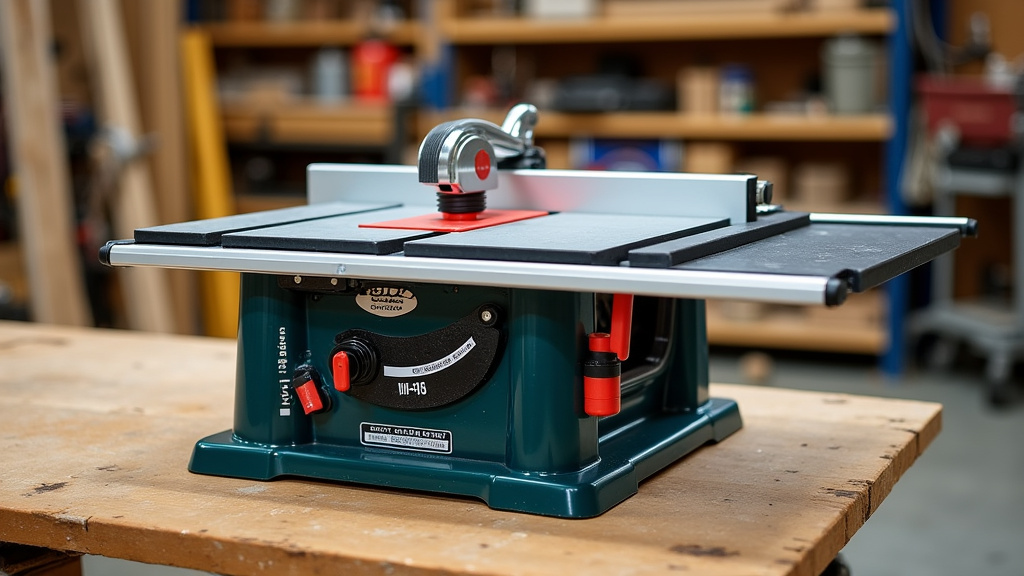
The tabletop is the surface where you’ll place your wood. It’s usually made of cast iron or aluminum for durability and stability. Slots in the table, called miter slots, guide a miter gauge for angled cuts. A blade, typically 10 inches, sticks up through a gap in the table. This is where the actual cutting happens.
A fence slides along the edge of the table. You use it to guide your workpiece for straight rip cuts. The miter gauge, which fits into the miter slots, helps you make accurate crosscuts. Safety features like a blade guard and a riving knife are also present to protect you.
The Blade and Its Mechanism
The heart of any table saw is its blade. For portable models, the standard size is 10 inches. The blade spins at a high speed, driven by a motor. The motor’s power, often measured in amps, determines how effectively it can cut through different types of wood. We’ve seen that higher amperage motors can handle denser woods and tougher jobs more easily.
Safety Features You’ll Find
Safety is a big deal with any power tool, and table saws are no exception. Portable table saws typically come equipped with a blade guard. This plastic or metal shield covers the top of the blade, preventing accidental contact. A riving knife or splitter is also standard. It’s a piece of metal behind the blade that prevents the wood from pinching the blade and kicking back towards you. Many also include a push stick to help you guide smaller pieces of wood safely.
Why Choose a Portable Table Saw?
So, why would you opt for a portable table saw over a larger, more permanent one? The answer usually boils down to your workspace and how you use your tools. We’ve found that portability is a major draw for many users.
Space-Saving Design
If you work in a small garage, a basement workshop, or even an apartment, space is often at a premium. A portable table saw has a much smaller footprint than a stationary saw. When you’re done with it, you can often fold up the legs or stand it on its side for storage. This frees up valuable floor space for other projects or tools. It’s like having a piece of furniture that can disappear when you don’t need it.
Job Site Ready
For contractors and tradespeople, the ability to move tools to the job site is essential. A portable table saw is designed for this exact purpose. It can easily be loaded into a truck or van. You can then set it up on-site to make precise cuts for framing, trim work, or custom installations. We found that many professional users appreciate the convenience and efficiency it offers on location.
Budget-Friendly Options
Generally speaking, portable table saws are often more affordable than their larger counterparts. This makes them an attractive option for hobbyists, DIYers, or those just starting out. You get the functionality of a table saw without the hefty price tag of a professional cabinet saw. It’s a great way to enter the world of precise woodworking cuts.
What Kind of Cuts Can You Make?
Don’t let their small size fool you; portable table saws are capable of a surprising range of cuts. They are excellent for the most common woodworking tasks you’ll encounter.
Rip Cuts and Crosscuts
The two most basic but important cuts are rip cuts and crosscuts. A rip cut is made parallel to the grain of the wood, typically to make a board narrower. You achieve this by sliding the wood along the fence. A crosscut is made perpendicular to the grain, usually to shorten a board to a specific length. This is done using the miter gauge or a crosscut sled.
Bevel Cuts and More
Many portable table saws allow you to tilt the blade to make bevel cuts. This is essential for tasks like cutting trim for angled corners or creating dados and rabbets. You can often adjust the blade angle from 0 to 45 degrees. With the right jigs and accessories, you can even make more specialized cuts, though they might require a bit more setup. We found that the versatility here is a big plus for many users.
Key Considerations When Buying
When you’re looking to buy a portable table saw, a few things stand out. Thinking about these will help you find the right tool for your needs. We often recommend looking at these points first.
Motor Power and Durability
Consider the motor’s amperage. Higher amps generally mean more power, which is important for cutting harder woods or making repeated cuts. Also, check the build quality. A sturdy table and a well-built stand will make the saw more stable and accurate over time. We found that models with cast-iron tops tend to be more durable and less prone to vibration.
Portability Features
Think about how you’ll be moving the saw. Does it have a built-in stand with wheels? Are the folding legs easy to operate? Some saws are designed for very easy one-handed setup and takedown, which can be a lifesaver on busy job sites. Assess what kind of transportation and setup you’ll realistically need.
Included Accessories
What comes in the box? Some saws include a basic miter gauge, while others offer more robust versions. Check if a riving knife and blade guard are included, and how easy they are to install and remove. Extra blades, dust collection attachments, or push sticks can also add to the overall value.
A Quick Checklist for Your Portable Table Saw Search
Ready to find the perfect portable table saw? Keep these points in mind as you shop:
- Check the motor power (amps) for your typical wood types.
- Look at the table material (cast iron is generally more durable).
- Evaluate the stand’s design for ease of setup and portability.
- Inspect safety features like the blade guard and riving knife.
- Consider the dust collection capabilities; it makes a big difference.
- Read reviews to see real-world performance and durability.
Conclusion
You’ve learned that a portable table saw is your versatile workshop companion, designed for cutting wood with the power of a larger saw but in a mobile package. It’s perfect for DIYers and professionals who need to make precise cuts wherever their projects take them, especially if you have limited space or work on different job sites. We found that their compact size, lightweight design, and budget-friendly nature make them an excellent choice. Now you can confidently assess your needs and find the portable table saw that best fits your workshop and projects.
Frequently Asked Questions
Can a portable table saw handle thick hardwoods?
Yes, many portable table saws can cut hardwoods, but you’ll want to look for models with higher motor amperage. A more powerful motor will make these cuts easier and prevent the blade from bogging down. Always use a sharp blade suited for hardwoods and proceed slowly for best results.
Are portable table saws safe to use?
Like all power tools, portable table saws require careful operation. They come with essential safety features such as a blade guard and a riving knife, which we found significantly reduce risk. Always use safety glasses, a dust mask, and a push stick when needed, and follow the manufacturer’s instructions for safe operation.
How much space do you really need for a portable table saw?
Portable table saws have a small footprint, but you’ll need enough space around the saw to safely feed and control your wood. We recommend at least 2-3 feet of clear space in front of and behind the saw, plus enough room to maneuver your workpiece. You also need space to store it when not in use.
What’s the difference between a portable table saw and a jobsite table saw?
While the terms are often used interchangeably, “jobsite table saw” usually refers to a portable table saw specifically designed with features like robust stands, wheels, and durable construction for frequent transport to and from work sites. They are built to withstand the rigors of a construction environment more than a lighter portable model. While the terms are often used interchangeably, a jobsite table saw usually refers to a portable table saw specifically designed for frequent transport to and from work sites.
Can you attach dust collection to a portable table saw?
Most portable table saws have a port designed for connecting a shop vacuum or a dedicated dust collection system. Keeping your workspace clean improves safety and air quality. We found that effective dust collection makes a big difference, especially for repetitive tasks or in enclosed spaces.