What Is a Mini Table Saw? What Matters Most
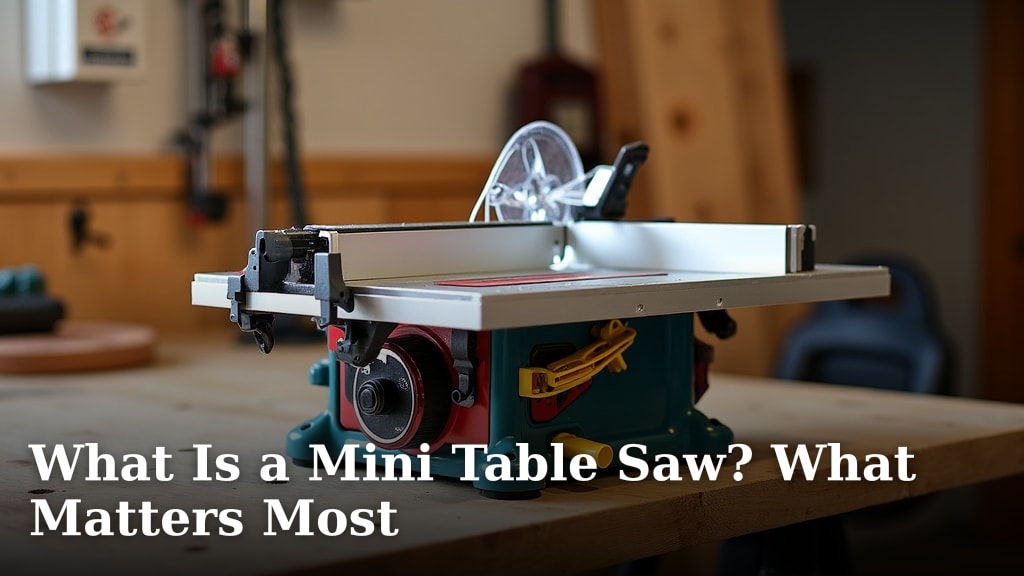
A mini table saw is a small, benchtop power tool designed for making precise, detailed cuts in thin materials like wood, plastic, and soft metals. It is a compact version of a full-size table saw, perfect for hobbyists and crafters with limited workshop space.
You’ll find these tools are highly valued for their portability and ability to handle delicate projects. We found that they excel at tasks like model building, fine joinery, and cutting small craft pieces where accuracy matters more than power. The key is understanding what features matter most for your specific needs.
- A mini table saw is a compact, benchtop tool for precise, small-scale cuts.
- It’s ideal for hobbyists, crafters, and anyone with limited workshop space.
- The most important factors are the motor power, blade size, and safety features.
- Portability and ease of use are major benefits compared to full-size saws.
- You must prioritize safety guards and a stable work surface for reliable results.
Below, we break down exactly what to look for, so you can confidently choose the right mini table saw for your projects.
Understanding the Mini Table Saw and Its Key Features
A mini table saw is defined by its compact size and focused purpose. It is not simply a smaller version of a job-site table saw; it is a specialized tool for detailed, small-scale work. This distinction is what matters most. You are looking for a tool built for precision on thin materials, not for ripping large lumber.
We found that the best way to understand this tool is to look at what it does versus a standard saw. Think of it like the difference between a precision scalpel and a heavy-duty axe. Both cut, but for very different tasks and with different user intent.
Mini vs. Full-Size: A Clear Comparison
To see the difference clearly, consider these core aspects. A full-size table saw is designed for power, capacity, and handling large workpieces. A mini model trades that capacity for accuracy, safety with small items, and a tiny footprint.
| Feature | Mini Table Saw | Full-Size Table Saw |
|---|---|---|
| Primary Use | Cutting thin wood, plastic, craft materials, soft metals | Ripping and crosscutting lumber, plywood sheets |
| Motor Power | Lower amperage (typically 2-6 amps) | Higher amperage (10-15+ amps) |
| Blade Size | Small, often 4 to 6 inches | Large, standard 10 inches |
| Workspace | Fits on a workbench; portable | Requires dedicated floor space or a large mobile base |
| Safety Focus | Designed to minimize risk with small, delicate pieces | Requires more user knowledge to manage kickback risks |
Choosing the wrong type leads to frustration. Using a full-size saw for a tiny model airplane part is overkill and dangerous. Using a mini saw to cut a 2×4 will likely burn out its motor and give you a poor result.
The Most Important Features to Consider
When you start shopping, the number of specs can be overwhelming. We narrowed it down to what truly affects your projects. Focus on these core features first, as they directly determine what you can and cannot do with the tool.
Motor Power and Blade Size
These two features are directly linked. The motor must be powerful enough to spin the blade through your chosen material without slowing down. A weak motor leads to burning, rough cuts, and potential kickback.
Most mini saws use small induction or universal motors. We found that models in the 3 to 5 amp range are a good starting point for hobbyists working with balsa, basswood, and acrylics. Anything less might struggle. Anything more is often unnecessary and adds to the cost and weight.
The blade size dictates the maximum thickness you can cut. A 4-inch blade will handle sheets up to about 1 inch thick, but always check the specific model’s cutting capacity. A larger 5 or 6-inch blade gives you a bit more flexibility.
Choosing the Right Blade
The blade that comes with the saw is often a general-purpose one. For better results, plan to buy specialty blades. A fine-tooth blade (40-60 teeth) gives you cleaner cuts on wood and plastic. A blade with fewer, stronger teeth might be better for some soft metals.
Always ensure the blade’s arbor size matches your saw. This is a common mistake. Buying a great blade that doesn’t fit is a waste of money and causes unnecessary hassle.
Work Surface and Fence Accuracy
This is where your project meets the tool. A flat, stable work surface is non-negotiable. Warped or uneven tops lead to inaccurate cuts and are a safety hazard. Look for a cast aluminum or steel table, not plastic.
The rip fence guides your material for straight cuts. On mini saws, fences can vary from flimsy to surprisingly precise. A good fence should lock solidly and be easy to adjust. Many experts say that a saw with a mediocre motor but an excellent fence is often more useful than the reverse (Fine Woodworking).
Checking for Stability
Before you even turn it on, check the saw’s base. Does it have non-slip feet? Can it be bolted down? A lightweight saw that slides around on your bench is both frustrating and unsafe. Weight can be an ally for stability.
Test the fence with a square. Does it sit at a perfect 90-degree angle to the table? Is the distance it moves parallel to the blade consistent along its entire length? This simple check can save you hours of project headaches.
Safety Features are Not Optional
Working with spinning blades and small materials introduces specific risks. The danger often comes from tiny fingers being too close to the blade or small off-cuts becoming projectiles. Your saw must have built-in safeguards to protect you.
According to injury data from the U.S. Consumer Product Safety Commission (CPSC), a significant number of workshop injuries involve table saws, emphasizing the need for all models, including mini saws, to have proper safety components.
Essential Safety Guards
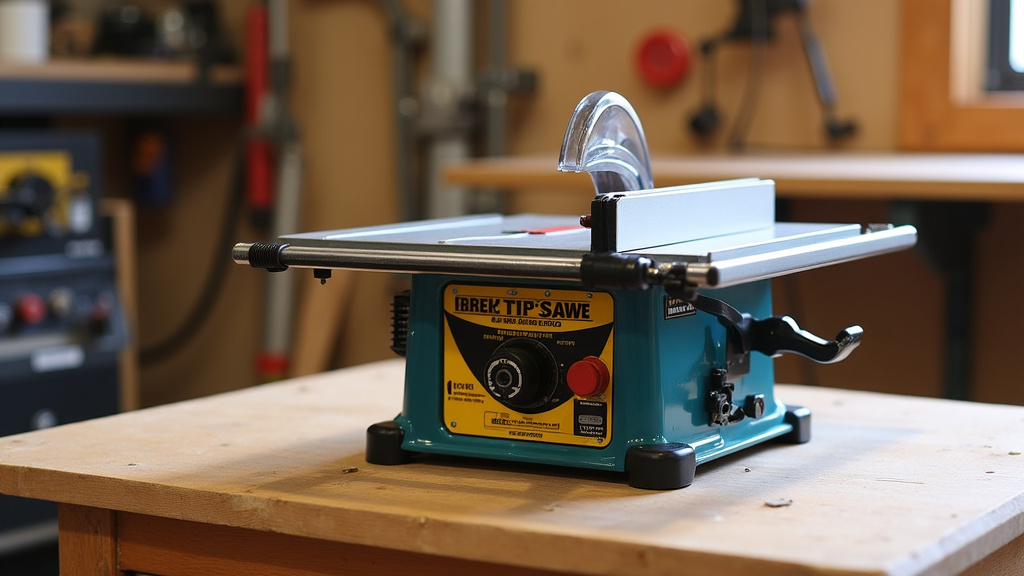
The blade guard is your first line of defense. It covers the blade when it’s not actively cutting a piece. A good guard is clear, so you can see your cut line, and it moves smoothly up and down with the blade’s position.
A riving knife or splitter sits behind the blade. Its job is to prevent the wood from pinching the back of the blade, which causes dangerous kickback. On a mini saw, this is still a critical safety feature, even for small pieces.
Look for a reliable on/off switch that is easy to reach, often with a large, paddle-style design. You never want to fumble for a tiny switch in an emergency.
Additional Features That Add Convenience
Once the core features and safety are covered, other additions can make your experience smoother. These are not deal-breakers, but they can elevate a good saw to a great one for your workshop.
Mitigating Dust and Noise
Mini saws create fine dust that gets everywhere. A model with a built-in dust collection port is a huge plus. You can attach a small shop vacuum to it, keeping your air and workspace cleaner. This is better for your lungs and your project visibility.
Noise level is another factor. While all saws are loud, some are quieter than others. If you work in an apartment or shared space, checking decibel ratings can prevent complaints. Hearing protection is still a must, however.
Miter Gauge and Bevel Cuts
A miter gauge allows you to make angled crosscuts. This is essential for cutting frames, creating joints, or making precise angled pieces. Test how smoothly it slides in its slot. A wobbly gauge leads to inaccurate angles.
Some mini saws offer the ability to tilt the blade for bevel cuts. This adds another dimension to your projects, letting you create beveled edges and more complex joinery. Ensure the angle scale is easy to read and lock securely.
Your Mini Table Saw Buying Checklist
Use this quick checklist when you’re comparing models. If you can answer “yes” to these points, you’re likely looking at a solid tool that will serve you well for years.
- Is the motor at least 3 amps for reliable power?
- Is the work table flat, stable, and made of metal?
- Does it have a blade guard and a riving knife/splitter?
- Is the rip fence easy to adjust and locks firmly without movement?
- Is the overall build sturdy, not flimsy or made mostly of plastic?
- Does it have a dust port to help manage sawdust?
Take your time with this decision. A good mini table saw is an investment in your hobby’s quality and your personal safety. By focusing on these core aspects, you can cut through the marketing noise and find the tool that truly fits your needs.
Conclusion
You are now equipped to make a smart choice. Remember, a mini table saw is a specialist tool for precision work on thin materials. Its power lies in accuracy, not brute force. Your focus should always be on a flat work surface, a reliable fence, and essential safety guards like a riving knife. A strong motor of 3-5 amps paired with the right blade will handle most hobbyist materials. Use the buying checklist we provided as your final guide. Taking these steps ensures you select a safe, durable saw that truly fits your projects, saving you frustration and delivering cleaner results.
Frequently Asked Questions
What materials can I realistically cut with a mini table saw?
You can confidently cut thin woods like balsa, basswood, and plywood up to 1/2 inch. They also handle plastics like acrylic and styrene, soft metals like aluminum, and craft materials like foam board. Always check the saw’s specified cutting capacity and use the correct blade for the material to avoid poor cuts or damage.
Is a mini table saw the same as a scroll saw?
No, they are different tools. A mini table saw excels at straight cuts and rips with the material moving over a table. A scroll saw uses a fine, reciprocating blade for intricate curved cuts and internal cutouts. They are complementary tools for different tasks in a detailed workshop.
Can a mini table saw handle thicker pieces of wood?
Generally, no. Most models are designed for materials up to 1 inch thick at maximum, with ideal performance on much thinner stock. Pushing thick, hard lumber through a mini saw strains the motor, risks kickback, and will not give you a clean or safe cut. It’s not its intended purpose.
How often do I need to change the blade?
It depends on use and material. We recommend inspecting the blade before each project. A dull blade (causing burning or rough edges) or a damaged tooth means it’s time to replace it. For a hobbyist using the saw weekly, a new blade every few months is a common guideline.
Is dust collection really necessary for such a small tool?
Yes, it is highly recommended. Mini saws create very fine dust that hangs in the air and settles everywhere. Even a simple attachment to a shop vacuum dramatically improves air quality and keeps your cut line visible. It protects your lungs and makes cleanup much easier.