Do I Need a Table Saw for Woodworking? The Quick Version

No, you do not always need a table saw for woodworking, especially when you’re just starting out. While a table saw is a powerful tool for making precise cuts, many woodworking projects can be completed with less expensive and more portable tools like circular saws or even hand saws. Your project’s scope and your budget will determine if a table saw is a necessary investment for you.
Many beginners wonder about the essential tools for their workshop. We found that the answer really depends on the types of projects you plan to build. For many tasks, a good circular saw can do the job just fine. Table saws offer speed and accuracy for certain cuts, but they also come with a higher cost and learning curve.
- A table saw isn’t always necessary for beginners.
- Many projects can be done with a circular saw or hand saw.
- Consider your project types and budget.
- Table saws offer precision but are costly and require practice.
Let’s break down whether a table saw fits into your woodworking plans.
Is a Table Saw a Must-Have for Woodworking Projects?
Let’s talk about whether you really need a table saw to start building things. For many people just getting into woodworking, the answer is a resounding “no.” You can absolutely create fantastic projects without one. Think of it like baking: you can make amazing cookies with just a simple bowl and spoon, even though a stand mixer makes things faster. Your woodworking journey can start with more basic tools and grow from there.
We’ve found that the core of this question often comes down to what you want to build and how much you’re willing to invest upfront. A table saw is a big purchase, both in money and space. It’s like buying a sports car when you just need to get to the grocery store. It’s powerful, yes, but maybe not the right first step for everyone.
Understanding the Table Saw’s Role
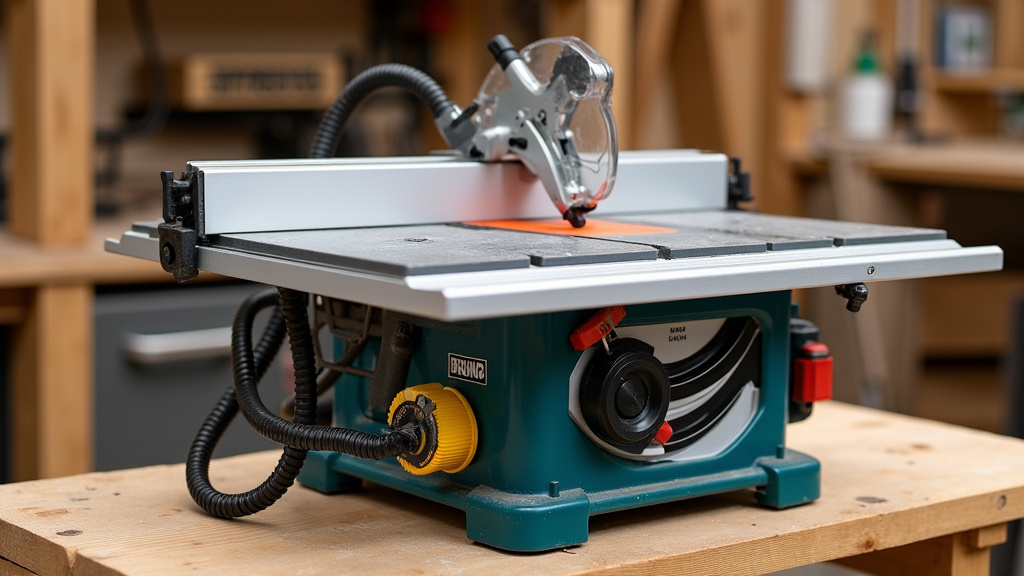
A table saw is essentially a circular saw blade that protrudes through a table surface. You push the wood through the blade to make cuts. This design is fantastic for making long, straight cuts quickly and accurately. It’s also great for making repeatable cuts, meaning you can cut many identical pieces efficiently. This is where its power truly shines.
Many woodworkers consider it the heart of their workshop because of its versatility for common tasks. Making dados (grooves) or rabbets (edge notches) is much easier with a table saw. You can also use various jigs and accessories to perform more specialized cuts like tenons or box joints. But again, these are often advanced techniques or for specific types of furniture building.
Alternatives for Accurate Cuts
So, what if a table saw isn’t in the cards right now? Don’t worry, you have excellent alternatives. A good quality circular saw is incredibly versatile. With a straight edge guide or a track saw system, you can achieve very precise cuts. Many DIYers find they can complete a vast range of projects using just a circular saw.
For even simpler projects or if you’re on a very tight budget, a hand saw can still get the job done. It requires more physical effort and practice to achieve perfectly straight cuts, but it’s a fundamental skill that many woodworkers hone early on. Research shows that with proper technique, hand saws can produce surprisingly accurate results (American Woodworker).
The Circular Saw Advantage
Think of a circular saw as your workhorse. It’s portable, meaning you can take it to your lumber, rather than bringing lumber to a stationary tool. This is a huge advantage if you have limited workshop space. You can make crosscuts (cutting across the grain) and rip cuts (cutting with the grain) fairly easily.
Adding a rip fence or a guide rail can dramatically improve the accuracy of your circular saw cuts. A rip fence attaches to the saw and acts as a guide, allowing you to cut parallel to the edge of your material. Guide rails or straight edges clamped to your wood create a consistent path for the saw base, ensuring straight lines. Many woodworking blogs offer tutorials on creating simple, inexpensive guide systems.
Hand Saws: More Than Just Basic
Don’t underestimate the power and precision of a well-maintained hand saw. Different types exist for different tasks, like crosscut saws and ripsaws. Learning to use a hand saw teaches you a lot about the wood itself. You develop a feel for the grain and how to work with it.
For those concerned about accuracy, sharpening your saw teeth regularly is key. A sharp saw cuts cleanly and with less effort. You can also practice cutting along a marked line using a speed square or combination square to keep your saw on track. It’s a wonderfully satisfying skill to master.
When Does a Table Saw Make Sense?
A table saw starts to become a very useful, if not necessary, tool when you’re looking for speed, repeatability, and fine-tuned accuracy on a regular basis. If you find yourself making dozens of identical cuts for furniture parts, shelving, or repetitive joinery, a table saw will save you a tremendous amount of time and frustration.
Consider the types of projects you see yourself tackling in the future. Are you aiming to build complex cabinets with perfectly matched drawers? Or perhaps creating rocking chairs with precisely angled legs? If these kinds of detailed projects are your goal, investing in a table saw could be a wise decision down the line.
Repeatable Cuts and Volume Work
Imagine building a large bookshelf. You’ll need many identical shelves and vertical supports. With a table saw and a miter gauge or sled, you can set the fence once and make all those identical cuts in minutes. Doing this with a circular saw, while possible, requires careful measuring and clamping for each piece. This is where the table saw truly excels for efficiency.
Many experts say that for hobbyists who build multiple pieces of furniture or cabinetry, the time saved by a table saw justifies its cost. It frees up more time for the enjoyable aspects of woodworking rather than repetitive cutting.
Advanced Joinery and Precision
Table saws offer unique capabilities for joinery. Using a dado blade stack, you can cut clean, consistent grooves for drawer bottoms or shelf supports. They also make it easier to create rabbets for joining panels or picture frames. Specialized jigs allow for cutting tenons (the tongue part of a mortise and tenon joint) and box joints, which are strong and decorative.
While these joints can be made with hand tools or other power tools, the table saw often provides a faster and more precise method, especially for those new to these techniques. Many woodworking guides suggest that mastering these table saw operations opens up a wider range of construction possibilities.
Space, Budget, and Safety Considerations
Let’s be honest, table saws are bulky and expensive. Even a small benchtop model takes up significant space. A full-sized cabinet saw can be the centerpiece of a workshop. You also need to factor in the cost of the saw itself, plus any necessary accessories like push sticks, safety glasses, and perhaps a mobile base.
Safety is also a major factor. Table saws are powerful machines that demand respect and proper technique. Always use safety guards, push sticks, and understand how to feed wood safely. Many woodworking organizations offer courses on safe table saw operation (Woodworking Safety Council).
Workshop Footprint and Portability
Where will this saw live? A contractor-style table saw, for example, might be moved around a garage, but a cabinet saw is meant to stay put. If you have a small apartment workshop or primarily work outdoors, a large stationary tool might not be practical. Circular saws and even some portable table saws offer more flexibility here.
We found that many beginners underestimate the space requirements for not just the tool itself, but also for the material you’ll be cutting and the space you need to stand safely. Planning your workshop layout is key, whether you have a lot of room or just a corner.
The Financial Investment
A decent table saw can cost anywhere from a few hundred dollars for a basic contractor model to well over a thousand for a more robust cabinet saw. This is a significant investment, especially when you’re just starting. Compare this to a good circular saw, which can often be purchased for under $150.
Your budget might dictate your tool choices early on. It’s perfectly fine to start with less expensive tools and upgrade as your skills and needs evolve. Many woodworkers begin with a circular saw and hand tools, eventually adding a table saw when they feel it’s justified by their project demands.
Your Woodworking Checklist
Before you decide, ask yourself these quick questions:
- Do I have specific projects in mind that require precise, repeatable cuts?
- Can I afford a table saw and the necessary accessories right now?
- Do I have adequate, safe space for a table saw in my workshop?
- Am I willing to learn and practice safe operating procedures for a powerful tool?
- Can I achieve similar results with a circular saw and guides for my current needs?
- Will a table saw genuinely save me time and frustration on the projects I plan to build?
Answering these can help clarify if a table saw is the next logical step for you or if you can achieve your woodworking goals with other tools.
Conclusion
So, do you need a table saw? For most beginners, the answer is a clear “not yet.” You can absolutely start building amazing things with a circular saw or even hand tools. We found that focusing on your project goals and your current budget is the best way to decide. A table saw offers unmatched speed and accuracy for certain tasks, but it’s a big investment in money and space. Start with what you have, hone your skills, and consider a table saw when your projects demand its capabilities and your workshop is ready for it.
Frequently Asked Questions
Can I build furniture without a table saw?
Yes, you absolutely can. Many furniture projects can be successfully built using a good circular saw with a guide or even precise hand tools. It might take a bit more time and careful measuring, but the results can be just as beautiful and functional.
Is a table saw worth the investment for a beginner hobbyist?
For most beginners, a table saw is likely not the first essential tool. Research shows that more accessible tools like circular saws are often sufficient. Consider investing in a table saw once you’ve completed several projects and identify a consistent need for its specific capabilities.
How does a circular saw compare to a table saw for making straight cuts?
A table saw excels at making long, repeatable rip cuts and crosscuts with its fixed blade and fence system. A circular saw, especially when paired with a straight edge guide or a track saw system, can also produce very accurate straight cuts, though it requires more setup.
What kind of projects *require* a table saw?
Projects involving a high volume of identical cuts, complex joinery like dadoes or rabbets, or very precise panel sizing might benefit most from a table saw. Think large cabinet builds or furniture with many identical components where repeatability is key.
Is safety a bigger concern with a table saw than other tools?
Yes, table saws are powerful machines that demand a higher level of respect and adherence to safety protocols due to their design. Always use push sticks, wear safety glasses, and understand how to feed material correctly to avoid kickback and other hazards.