What Is a Good Table Saw for a Garage Shop? What to Expect
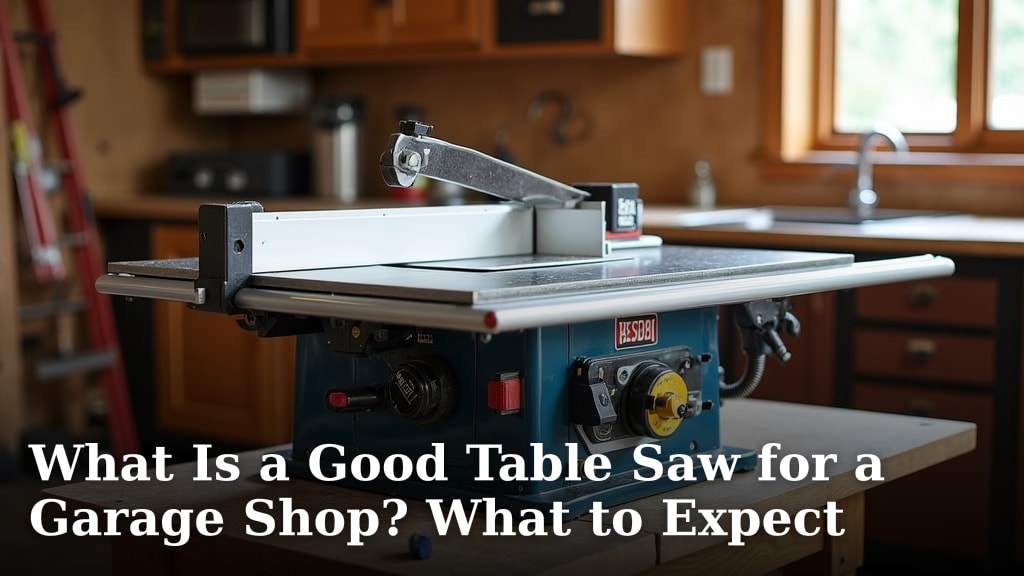
Finding a good table saw for a garage shop depends on your projects and budget. For most DIYers, a hybrid table saw offers a great balance of power and size. These saws are designed for hobbyists and home use. They provide excellent accuracy for woodworking tasks.
What you can expect is a saw that fits comfortably in a garage space. It should offer enough power for ripping lumber and making precise cuts. Many good garage table saws also include safety features like riving knives and blade guards. This ensures you can work with confidence.
- A good garage table saw balances power, size, and price.
- Hybrid models are often the best fit for garage shops.
- Look for features that ensure accuracy and safety.
- Consider the types of projects you’ll be doing.
Let’s walk through what makes a table saw a great choice for your garage workspace.
Choosing the Right Table Saw for Your Garage Workshop
You’re ready to upgrade your garage workshop, and a table saw is often the next big tool on the list. But with so many options, what truly makes a table saw a good fit for a garage? It really comes down to matching the saw’s capabilities to the projects you plan to tackle and the space you have available.
Understanding Table Saw Types for Home Use
When we talk about table saws for a garage, we’re usually looking at a few main categories. Each has its own strengths, and understanding them helps you narrow down your choices. Think about what you’ll be cutting most often. For portability and smaller spaces, consider what a jobsite table saw offers.
Contractor Saws: The Classic Choice
These are the workhorses of many older shops. Contractor saws typically have open stands with legs. They are usually belt-driven, meaning a motor spins a belt that turns the blade. This design can make them a bit louder and less powerful than newer options. However, they are often more affordable. Many woodworkers find them to be reliable tools.
Hybrid Saws: The Best of Both Worlds
For most garage shops, hybrid table saws hit that sweet spot. They blend features from contractor saws and cabinet saws. You get a more enclosed base and a more powerful motor than a typical contractor saw. Yet, they are generally smaller and less expensive than full cabinet saws. They often come with a more robust fence system for accurate cuts. This makes them a popular choice for DIYers and hobbyists.
Cabinet Saws: Serious Power, Serious Space
These are the big guns, often found in professional woodworking shops. Cabinet saws have fully enclosed bases. They use powerful direct-drive motors, making them quieter and more efficient. They offer the best dust collection and the most robust fence systems. However, they are larger, heavier, and more expensive. Most garage shops don’t have the space or budget for a cabinet saw.
Key Features to Look For in a Garage Table Saw
Once you’ve considered the type of saw, let’s dive into the specific features that really matter for your garage workspace. These are the details that will impact your woodworking experience daily.
Motor Power: How Much Muscle Do You Need?
The motor is the heart of your table saw. For general woodworking in a garage, a 1.5 to 2 horsepower (HP) motor is usually sufficient. This power level can handle most hardwoods and common project lumber. More powerful motors are great, but they also require more electrical power and can increase the saw’s cost. If you plan on frequently cutting very dense hardwoods or thick stock, you might consider a bit more power.
Table Size and Extension: Room to Work
The table is where the magic happens. You’ll want enough surface area to support your workpieces. Look for a table size of at least 20 x 27 inches. Many saws come with extension wings that increase the table’s width. This is incredibly helpful for ripping long boards. A good fence system that glides smoothly is also essential for accurate, repeatable cuts.
Fence System: Your Guide to Precision
The fence is your guide for cutting straight lines. A The fence is your guide for making straight cuts, and understanding its role is key.“beyside” fence is the most common and generally works well. It slides along a rail and locks into place. Some higher-end saws have a “one-point” system, which can be easier to adjust. What matters most is that the fence is sturdy, parallel to the blade, and locks down firmly. This ensures your cuts are accurate every time.
Riving Knife and Blade Guard: Safety First!
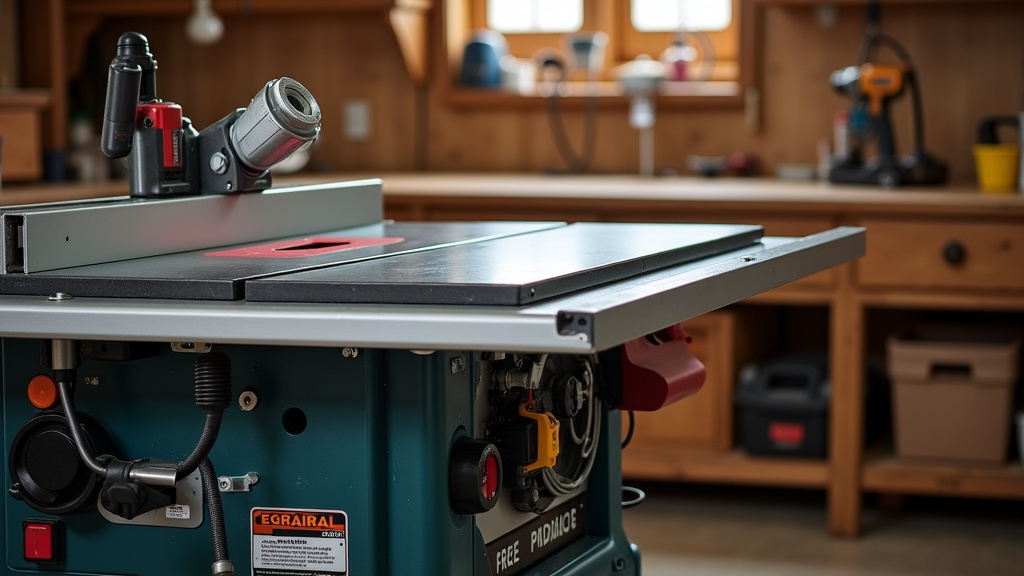
Safety features are non-negotiable. A riving knife is a thin piece of metal behind the blade. It prevents “kickback,” where wood is violently thrown back at you. It’s a critical safety device. A good blade guard covers the blade while allowing the riving knife to function. Look for a saw with a riving knife that advances and retracts with the blade. This makes it easier to use.
Dust Collection: Keep Your Air Clean
Table saws create a lot of sawdust. Good dust collection is important for your health and for keeping your shop clean. Most saws have a port to connect a shop vacuum or dust collector. The effectiveness of dust collection can vary greatly between models. A well-designed dust shroud around the blade can make a big difference. Check reviews for how well a specific model handles dust.
What to Expect When Setting Up and Using Your Garage Table Saw
Bringing a new table saw home is exciting, but there’s a bit to consider for setup and everyday use in a garage environment. Let’s manage expectations so you can hit the ground running.
Electrical Needs: Powering Up Safely
Most contractor and hybrid saws run on standard 120-volt household power. This is convenient for most garages. However, ensure your circuit can handle the saw’s power draw. Some larger hybrid saws might require a dedicated circuit, especially if you plan to run other tools at the same time. Always check your saw’s manual for specific electrical requirements.
Noise and Vibration: Garage Workshop Realities
Table saws can be noisy and vibrate. This is normal, but it’s something to be aware of, especially if you have neighbors close by. Using a thick rubber mat under the saw can help absorb some vibration. Always wear hearing protection when operating the saw. This is vital for protecting your hearing.
Space Considerations: Making It Fit
A table saw requires space not just for the unit itself, but also for maneuvering lumber. You need room in front to feed stock and behind to catch it. Allow for plenty of clearance around the saw for safe operation. Think about how you’ll move materials in and out of your garage.
Accuracy and Calibration: Fine-Tuning Your Tool
Out of the box, most table saws need some minor adjustments. This process is called calibration. You’ll want to ensure the blade is perfectly perpendicular to the table and parallel to the fence. Many online resources and manuals guide you through this. Taking the time to calibrate your saw ensures precise cuts from the start.
A Quick Checklist for Your Garage Table Saw Purchase
Ready to make a decision? Here’s a quick rundown of what to prioritize:
- Prioritize safety features: Riving knife and blade guard are essential.
- Check motor power: 1.5-2 HP is good for most garage projects.
- Evaluate the fence: Ensure it’s sturdy and locks securely.
- Consider table size: Enough surface area for your typical workpieces.
- Think about dust collection: A cleaner shop is a better shop.
- Read reviews: See what other garage woodworkers say about reliability.
Conclusion
Choosing the right table saw for your garage shop is about finding that perfect balance. You’ve learned that hybrid saws often offer the best mix of power, size, and affordability for home use. Remember to prioritize key features like motor power, a sturdy fence, and essential safety equipment such as a riving knife. Taking the time to calibrate your new saw will ensure accuracy. Now, take what you’ve learned and visit a local tool store or browse online to find the saw that best fits your projects and your space.
Frequently Asked Questions
Can I use a regular 120-volt outlet for most garage table saws?
Yes, most contractor and hybrid table saws are designed to run on standard 120-volt household power. It’s still a good idea to check your saw’s manual to ensure your home’s circuit can handle its power draw, especially if you plan to use other tools simultaneously.
How much space do I really need around a table saw?
You’ll need space not just for the saw itself, but also for feeding lumber in and catching it. Aim for at least 2-3 feet of clearance in front and behind the saw for safe operation and material handling.
Is a belt-driven or direct-drive motor better for a garage table saw?
For garage shops, belt-driven motors found in contractor and hybrid saws are generally sufficient and more budget-friendly. Direct-drive motors, common in cabinet saws, are more powerful but also more expensive and typically require more space than most garages can accommodate.
Do I really need a riving knife, or is a blade guard enough?
A riving knife is a critical safety feature that helps prevent dangerous kickback by keeping the wood kerf open behind the blade. While a blade guard offers protection, a riving knife is highly recommended for safe table saw operation.
How often will I need to calibrate my table saw?
Most table saws require initial calibration to ensure the blade is perfectly square to the table and parallel to the fence. After that, it’s good practice to check your calibration periodically, especially after moving the saw or if you notice your cuts becoming less accurate.