How to Choose a Table Saw: How It Is Done
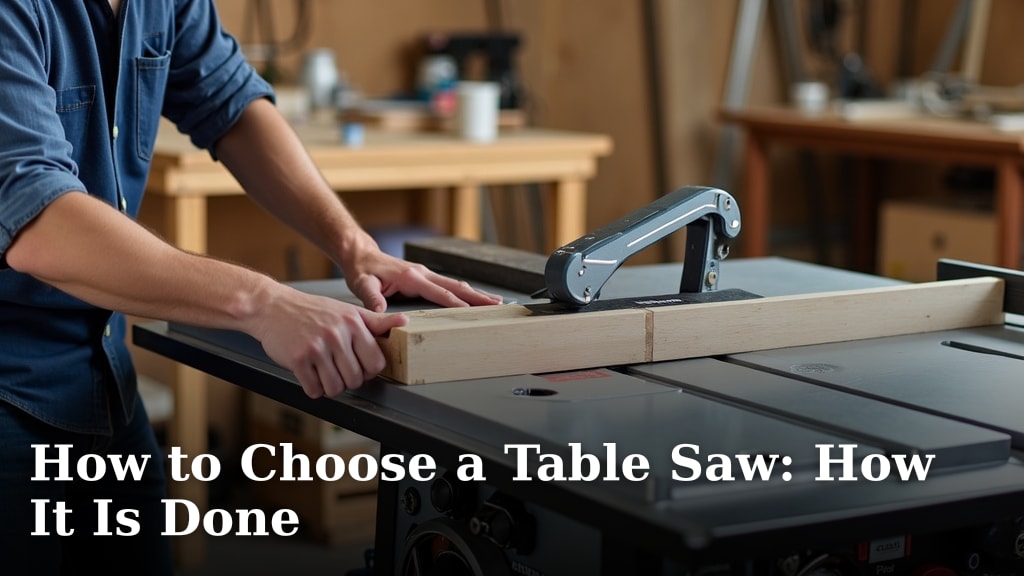
Choosing the right table saw for your needs involves considering power, size, and features. You’ll want to match the saw’s capabilities to the types of projects you tackle. A good table saw will make your woodworking easier and safer.
Many factors go into selecting a table saw. Think about your workspace and how much room you have. Also, consider the budget you have in mind. We found that understanding these basics helps narrow down your options considerably.
- Match saw power to your projects.
- Consider your available workspace.
- Set a realistic budget beforehand.
- Look for safety features like a blade guard.
- Think about the types of cuts you’ll make.
Let’s walk through how to choose the perfect table saw for your workshop, step by step.
Picking the Right Table Saw for Your Workshop
Choosing a table saw can feel like a big decision. You want a tool that helps you make accurate cuts without breaking the bank or taking over your entire garage. We’ve researched what matters most to everyday shoppers.
Your table saw choice depends on your projects, your space, and your budget. Let’s break down each factor to help you find the perfect fit.
Understanding Table Saw Types and Their Uses
Table saws aren’t one-size-fits-all. They come in different sizes with different power levels.
Benchtop Table Saws: Small and Mighty
These are the smallest and most affordable table saws. They’re great for small workshops or if you need to move your saw around often. Think of them as your entry-level workhorse.
Benchtop saws are lightweight. You can easily carry them to a job site or store them away when not in use. Their motors are usually less powerful than larger saws. This means they might struggle with very dense hardwoods or large, thick cuts.
Jobsite Table Saws: Portable Powerhouses
Jobsite table saws are a step up. They offer more power and durability than benchtop models. They are built to withstand the rigors of construction sites.
These saws often have sturdy stands and wheels for easier transport. They can handle a wider range of tasks. You’ll find they have better dust collection features, too. We found many woodworkers choose these for their versatility and portability.
Contractor Table Saws: The Classic Choice
Contractor saws are a popular choice for serious DIYers and small shops. They used to be the standard for contractors, hence the name. They offer a good balance of power and features.
You’ll notice they often have an open stand design. This allows for better dust collection and easier access to the blade. They usually have a belt-driven motor, which can be quieter and more powerful than direct-drive motors found in smaller saws.
Cabinet Table Saws: For Serious Woodworkers
If you’re looking for the most powerful and accurate table saw, a cabinet saw is likely your target. These are large, heavy machines designed for commercial shops or dedicated home workshops.
Cabinet saws have enclosed cabinets. This offers excellent dust collection and sound dampening. They have the most powerful motors and robust construction. This means they can handle continuous, heavy use. We found that their precision is unmatched for fine woodworking.
Key Features to Consider for Your Table Saw
Beyond the type of saw, several features directly impact its usability and safety.
Motor Power: What You Need to Cut
Motor power is measured in amps or horsepower (HP). More power means the saw can cut through tougher materials without bogging down.
For light DIY projects, a 10-amp motor might be enough. For denser woods or frequent use, look for 13 amps or higher. A 2 HP motor or more is typical for contractor and cabinet saws. We found that underpowered saws can be frustrating and even dangerous.
Table Size and Extension: Your Workspace for Wood
The table size determines how much material you can support. Larger tables provide more stability for bigger workpieces.
Table extensions can increase the usable surface area. This is very helpful for cutting wide boards. Make sure any extensions are sturdy and align well with the main table. We found that a smooth, flat table is essential for accurate cuts.
Blade and Fence System: Precision Matters
The blade is what does the cutting. Ensure the saw accepts standard 10-inch blades. Look for blades designed for the types of cuts you’ll make (e.g., rip blades, crosscut blades).
The fence is a guide that runs parallel to the blade. A good fence should be sturdy, easy to adjust, and lock down firmly. A fence that easily slides and stays parallel is critical for straight cuts. We found that a rack-and-pinion fence system is often preferred for its ease of use.
Safety Features: Non-Negotiable for Your Well-being
Safety should always be your top priority. Table saws have many potential hazards.
- Blade Guard: This covers the blade while cutting. It should allow you to see the blade and easily remove it when needed.
- Riving Knife or Splitter: This is a thin piece of metal behind the blade. It prevents the wood from pinching the blade and kicking back. We found this to be a critical safety device.
- Anti-Kickback Pawls: These are small teeth that dig into the wood if it starts to kick back.
- On/Off Switch: Ensure it’s easily accessible in case of an emergency. Many saws have a large paddle-style switch.
Always read and understand your saw’s safety manual. Proper safety gear, like safety glasses and hearing protection, is also a must. Many guidelines point to using a riving knife as a key safety measure (OSHA).
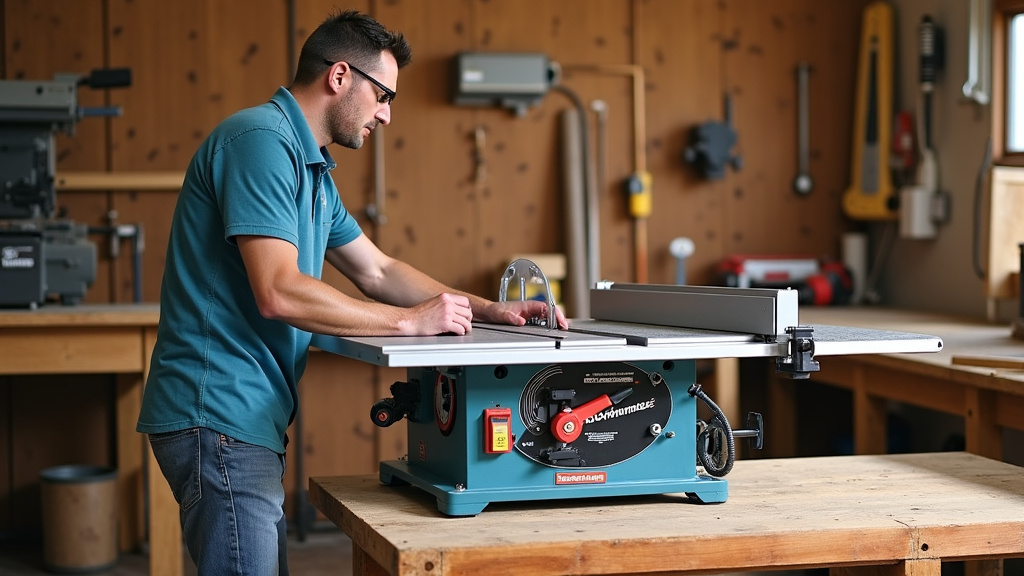
Considering Your Space and Budget
Your workshop size and budget will significantly narrow down your choices. Be realistic about what you can fit and afford.
Workspace Limitations: Where Will It Live?
Measure your available space carefully. Remember, you’ll need room around the saw to feed long pieces of wood. You also need space for dust collection equipment and storage.
Benchtop or jobsite saws are best for small spaces. Contractor saws need a bit more room. Cabinet saws demand a dedicated space. We found that many woodworkers underestimate the space needed for material handling.
Setting a Realistic Budget: How Much Can You Spend?
Prices can range from a couple of hundred dollars for a basic benchtop saw to several thousand for a cabinet saw. Don’t forget to factor in the cost of accessories like blades, a dado stack, and a mobile base.
We found that investing a little more upfront in a better-quality saw can save you frustration and money in the long run. It often means more durability and better performance.
Making the Final Decision: A Quick Checklist
Here’s a quick rundown to help you finalize your table saw choice:
- Have you assessed your typical projects and their material requirements?
- Do you have enough space for the saw, including material infeed and outfeed?
- Is the saw’s motor power sufficient for the woods you plan to cut?
- Does the saw have essential safety features like a riving knife and blade guard?
- Is the fence system sturdy and easy to adjust accurately?
- Does the saw fit comfortably within your defined budget?
Conclusion
You’ve now got a clear path to choosing your perfect table saw. Remember, it’s about matching the saw’s power and size to your specific projects and workspace. We found that being realistic about your needs and budget upfront saves a lot of headaches later. Don’t overlook essential safety features – they are non-negotiable for your well-being. Take the time to review your projects, measure your space, and set your budget. Your next step is to visit a store or browse online, armed with this knowledge, and find that saw that will serve you well for years to come.
Frequently Asked Questions
What’s the difference between a jobsite and a contractor table saw?
Jobsite table saws are designed for portability, often featuring built-in wheels and lighter frames for easy transport. Contractor table saws are typically heavier and more stationary, offering more power and a larger table area for more demanding woodworking tasks.
Do I really need a riving knife on my table saw?
Yes, a riving knife is a critical safety feature. We found that it helps prevent wood from pinching the blade after the cut is made, significantly reducing the risk of dangerous kickback.
How much motor power is enough for home use?
For general DIY and light woodworking, a motor around 10-13 amps is usually sufficient. If you plan to cut dense hardwoods or large stock frequently, consider a saw with higher horsepower, often found in contractor or cabinet models.
Can I use a benchtop table saw for larger projects?
Benchtop table saws are best suited for smaller projects and occasional use due to their limited power and smaller table surface. While they can handle some larger cuts with careful material support, they may struggle with very wide boards or dense materials.
What are the most important safety features to look for?
We strongly advise looking for a blade guard, a riving knife or splitter, and anti-kickback pawls. An easily accessible on/off switch is also essential for quick shutdowns in emergencies.