Do I Need a Table Saw or a Circular Saw? A Simple Guide
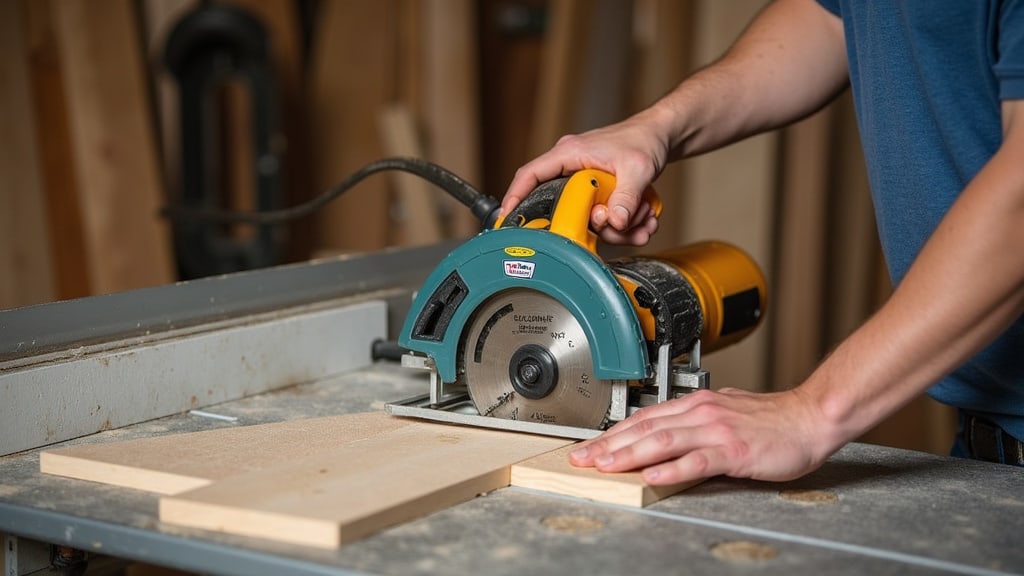
So, do you need a table saw or a circular saw for your projects? The answer depends on what you’ll be cutting and the types of cuts you plan to make. A circular saw is a portable workhorse for straight cuts, while a table saw offers more precision for repetitive tasks and larger sheets. Many DIYers start with a circular saw.
Choosing the right saw can make a big difference in your woodworking experience. You want a tool that fits your projects, your budget, and your workspace. We found that understanding their core strengths helps you pick the best saw for your needs. It’s not about one being “better,” but about finding the right fit.
- Circular saws are portable and great for straight cuts anywhere.
- Table saws offer more stability and precision for repeat cuts.
- Consider your typical projects and space before deciding.
- Both tools have their place in a workshop.
Let’s break down the differences between these two essential saws to help you decide which one is right for your shop.
Table Saw Versus Circular Saw: Which Is Best For You?
Choosing between a table saw and a circular saw can feel like a big decision. You want the right tool for your projects. We found that understanding their core strengths helps you pick the best saw for your needs. It’s not about one being “better,” but about finding the right fit for your workshop and your skills. Many DIYers start with a circular saw because it’s so versatile.
Understanding the Circular Saw: Your Portable Cutting Partner
Think of a circular saw as the everyday hero of cutting tools. It’s lightweight and portable. You can take it anywhere, from your garage to a job site. This makes it super handy for cutting materials where they are.
Its main job is making straight cuts. You guide the saw along a line, and its spinning blade zips through wood. It’s great for cutting dimensional lumber, plywood, and even some plastics or metals with the right blade.
The Power and Portability
Circular saws come in different sizes and power levels. Most DIYers find a 7 ¼-inch blade to be a good all-around choice. It can handle most common cuts. Corded models offer consistent power. Cordless versions give you freedom from outlets, which is amazing for large sheets or working outside.
We found that the depth of cut is a key feature. Make sure the saw you choose can cut through your thickest material. A common depth is around 2 ½ inches, which is plenty for most 2x lumber (National Woodworking Association).
When a Circular Saw Shines
This saw is your go-to for breaking down large sheets of plywood. You can lay the sheet flat and make your cuts. It’s also perfect for cutting lumber to length. Need to trim a door? A circular saw can do that.
Key uses for a circular saw:
- Cutting plywood and sheet goods to size.
- Crosscutting lumber for framing or projects.
- Making rough cuts on site.
- Trimming materials like decks or fences.
Exploring the Table Saw: Precision and Repeatability
A table saw is a stationary powerhouse. It has a blade that sticks up through a table. You feed the wood into the blade. This setup offers superior stability and precision. It’s especially good for making many identical cuts.
Table saws are fantastic for ripping lumber. Ripping means cutting along the grain of the wood to make it narrower. They also excel at making repeatable crosscuts and dadoes (grooves).
Stability and Accuracy
The stable platform of a table saw means you have more control. You push the wood into the blade. This is different from a circular saw where you move the saw. This makes it easier to get perfectly straight and square cuts every time.
Many table saws have a fence that runs parallel to the blade. You set the distance between the fence and the blade. Then, you slide your material against the fence. This ensures all your rips are the same width. This is a game-changer for projects with many identical parts.
When a Table Saw Is Your Best Bet
If you plan to build furniture, cabinets, or anything requiring precise joinery, a table saw is hard to beat. Making lots of identical shelves or drawer parts? A table saw is your friend. It’s also great for breaking down larger quantities of wood efficiently.
Think a table saw is for you if:
- You build furniture or cabinetry.
- You need to make many cuts of the same size.
- You want the highest level of accuracy for woodworking.
- You cut a lot of wood that needs to be ripped to width.
Comparing the Two Saws: A Quick Look
To help you visualize the differences, let’s put them side-by-side. We found this table helps clarify their primary roles.
| Feature | Circular Saw | Table Saw |
|---|---|---|
| Portability | High (Handheld) | Low (Stationary) |
| Primary Use | Straight cuts, breaking down sheets | Ripping, precise crosscuts, repeat cuts |
| Accuracy | Good, requires skill for perfection | Excellent, with proper setup |
| Space Needed | Minimal for operation, storage is easy | Significant footprint, needs dedicated space |
| Learning Curve | Lower | Higher, requires safety training |
Portability and Space Considerations
Your available space is a huge factor. A circular saw takes up almost no space when not in use. You can store it on a shelf. A table saw, however, is a big piece of equipment. It needs its own spot in your workshop. Many compact “jobsite” table saws exist, but they still take up considerably more room than a circular saw. A sliding table saw offers extreme precision for large panels, which may be relevant for advanced woodworking.
Safety First: What You Need to Know
Both saws have safety features and require careful operation. A circular saw needs you to maintain a firm grip and guide it smoothly. Never force the cut. Keep fingers away from the blade.
Table saws demand more respect due to their stationary nature and more powerful blades. Always use safety glasses and hearing protection. Many experts say a push stick is essential for feeding small pieces safely (Occupational Safety and Health Administration). Never reach over the blade. Understand your saw’s guards and riving knife – these are there to protect you.
Making Your Final Decision: A Checklist
To wrap things up, let’s consider what really matters for your decision. We’ve found that asking yourself a few key questions can point you in the right direction.
Ask yourself these questions:
- What kinds of projects will I do most often?
- How much space do I have for a saw?
- What is my budget for this tool?
- How important is extreme precision for my projects?
- Am I comfortable with a stationary tool or do I need portability?
If your projects are mostly about cutting lumber to length, breaking down big sheets of material, or quick fixes around the house, a circular saw is likely your best starting point. It’s affordable, versatile, and easy to learn.
If you dream of building fine furniture, require very precise cuts for joinery, or need to make many identical parts, a table saw will serve you much better in the long run. It’s an investment in accuracy and efficiency for more advanced woodworking.
Conclusion
Deciding between a table saw and a circular saw comes down to your specific needs and projects. We found that a circular saw is your go-to for portability and general cutting tasks, especially for breaking down large sheets or making quick cuts anywhere. If you’re building furniture, cabinets, or need consistent accuracy for many identical parts, a table saw offers the precision and stability you’ll need.
Consider your workspace, budget, and the types of cuts you make most often. Many DIYers start with a circular saw and add a table saw later. Your next step is to assess your current projects and decide which saw’s strengths align best with your workshop goals.
Frequently Asked Questions
Can a circular saw do most of the same cuts as a table saw?
A circular saw can make straight cuts, but it requires more skill and jigs to achieve the same precision as a table saw, especially for repeat cuts or ripping narrow pieces. You can guide a circular saw to make crosscuts, but ripping large sheets or lumber accurately with a handheld saw is challenging.
Is a table saw too big for a small garage workshop?
Table saws do require more dedicated space than a circular saw, but there are compact “jobsite” models available. These smaller table saws offer many of the same benefits but have a smaller footprint, making them more manageable for tighter workshops. You’ll still need room to feed wood safely.
Which saw is easier for beginners to use?
Generally, a circular saw has a lower learning curve. It’s handheld, so you guide the tool along your cut line. A table saw requires learning how to safely feed material into the blade using fences and push sticks, which can feel more intimidating at first.
Do I need both a circular saw and a table saw?
Many woodworkers find that having both tools offers the most versatility. A circular saw is great for on-site work or breaking down large sheet goods. A table saw excels at precise, repeatable cuts needed for finer woodworking projects. You can accomplish a lot with just one, but owning both expands your capabilities.
Can a circular saw be used to make dado cuts?
No, a standard circular saw cannot make dado cuts, which are grooves cut across the grain. Some specialized circular saw blades exist, but they don’t offer the same clean, consistent results as a table saw with a dado blade set or a router. Table saws are designed for these types of operations.